
How Roofing Types Affect Noise Control Inside Your Home
The type of roofing material significantly affects indoor noise levels by either absorbing or reflecting sound waves from rain, hail, wind, and traffic. Generally, denser, heavier materials (such as slate or concrete tiles) excel at blocking noise, while lighter materials (like metal) may amplify noise unless paired with proper insulation and underlayment.
The roofing types on your home directly affect noise control inside every room. Your roof acts as the primary acoustic barrier against traffic noise, aircraft, heavy rain, hail impact, and wind-driven vibration.
The material, density, and installation method of your roofing system determine how much outdoor sound energy transfers through the roof deck and into your living space. In New Orleans, where hurricane-season storms are intense and street-level activity is constant, indoor acoustic comfort starts with the right roof.
When considering a residential roof installation that balances protection with quiet comfort, TurnKey Roofers serves New Orleans and surrounding Louisiana communities with licensed, certified expertise across every major roofing type. Contact us today for a free consultation.
How Does Roofing Material Affect Indoor Noise Levels?
A roof’s acoustic performance depends on mass, density, and the number of sound-attenuating layers in the assembly. Denser roofing materials resist vibration transmission more effectively through a principle called the mass law, meaning a higher-mass roofing system transfers less sound energy into the interior.
The Mass Law: Why Roofing Density Matters for Sound
 Denser and heavier roofing materials physically resist the vibration that drives sound into a structure. Natural slate, clay tile, and concrete tile rank highest on the mass law scale for residential roofing. Lightweight options like bare metal panels or standard 3-tab asphalt shingles carry less inherent mass, making their acoustic performance more dependent on the underlayment and insulation layers beneath them.
What Is the Sound Transmission Class (STC) Rating?
The Sound Transmission Class (STC) rating measures how well a complete roofing assembly blocks airborne sound transmission from outdoors to indoors. Higher STC values indicate stronger noise-blocking performance. A residential roof assembly rated STC 45 to 55 delivers strong acoustic performance in most urban and storm-prone environments, covering the range most quality roofing systems achieve.
What Is the Noise Reduction Coefficient (NRC)?
The Noise Reduction Coefficient (NRC) measures how much sound energy a surface material absorbs rather than reflects or transmits through the assembly. A higher NRC rating means more sound energy is converted to heat through friction inside the material. Asphalt shingles paired with acoustic underlayment typically achieve NRC ratings of 0.35 to 0.45, while dense tile and natural slate systems perform higher due to surface texture and mass.
How the Full Roof Assembly Controls Sound Transmission
The complete roof assembly, not just the surface layer, determines total noise control performance. The outer roofing material, acoustic underlayment, roof decking, attic air space, and ceiling insulation each contribute to sound attenuation as a layered system. A high-quality acoustic underlayment or mineral wool attic insulation can significantly upgrade sound transmission loss for any roofing type.
Is a Metal Roof Loud Inside the House When It Rains?
A properly installed metal roof system with acoustic underlayment and attic insulation produces indoor sound levels comparable to asphalt shingles. A fully assembled metal roof with vibration-damping layers can reduce noise penetration by 40 to 60 percent, well within a comfortable residential acoustic range.
What Makes a Metal Roof Quieter Inside?
Panel gauge and roof pitch are the two primary variables in metal roof noise control. Thicker gauge panels vibrate less under rain and hail impact, reducing resonance transmission through the roof deck into the structure below. A steeper roof pitch also lowers the angle of impact, reducing impact noise intensity compared to low-slope or flat metal surfaces.
Acoustic Upgrades for Metal Roofing Systems
Mass-loaded vinyl (MLV) underlayment and rubber-based sound-damping barriers installed beneath metal roof panels address both impact sound and airborne vibration transmission. Stone-coated steel and standing seam panels with factory-applied acoustical backing are engineered specifically for improved noise performance and are well-suited to high-rainfall coastal environments like greater New Orleans.
How Well Do Asphalt Shingles Control Noise Inside a Home?
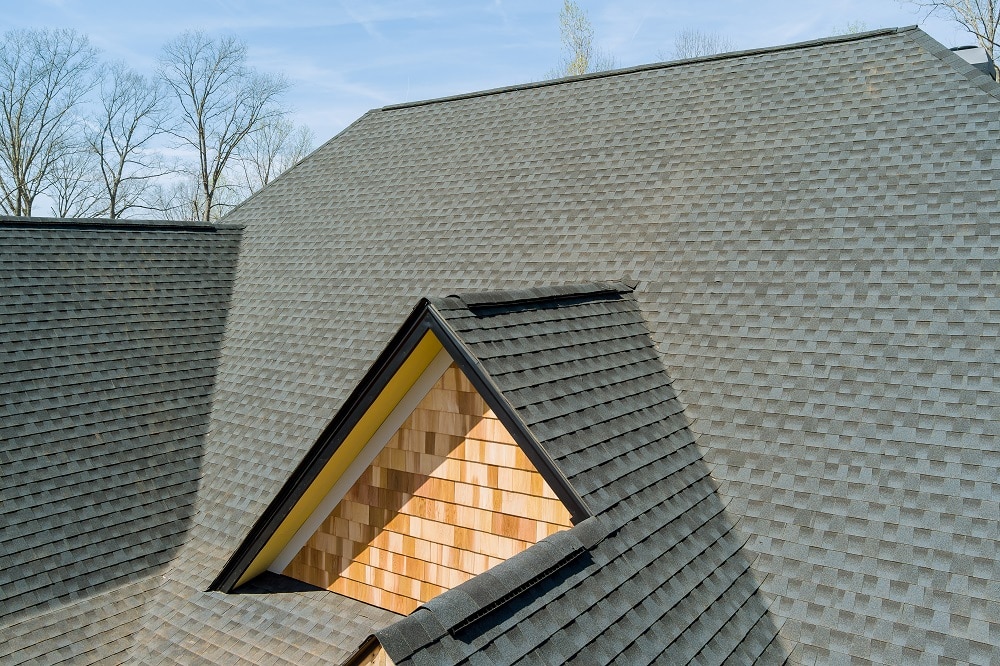
Asphalt shingles deliver moderate acoustic performance and remain the most cost-accessible roofing option for homeowners balancing noise control with budget. Paired with a high-STC acoustic underlayment, an asphalt shingle roof assembly can achieve STC ratings between 52 and 54.
Asphalt shingles consist of a fiberglass or organic mat base coated in asphalt and surfaced with ceramic granules. That multi-layer construction provides enough mass to attenuate mid-to-high-frequency sound from rainfall and moderate street noise. Here is how the main asphalt shingle types compare for noise control performance:
- 3-Tab Shingles: The lightest and thinnest asphalt option. Provides minimal independent noise reduction and relies almost entirely on acoustic underlayment and attic insulation for meaningful sound attenuation.
 Architectural Shingles: Thicker and heavier than 3-tab with a laminated construction that adds surface mass. Noticeably better at dampening rain and hail impact sound and represent the baseline recommendation for noise-conscious homeowners selecting asphalt.
- Composite or Modified Shingles: Some manufacturers now engineer shingle roofing products with sound-dampening properties built directly into the shingle substrate, delivering improved indoor quiet without a full material upgrade to tile or slate.
- Acoustic Underlayment Pairing: Regardless of shingle type, installing a high-STC underlayment beneath the shingles is the single most cost-effective upgrade for overall asphalt roof sound transmission performance.
 Architectural Shingles: Thicker and heavier than 3-tab with a laminated construction that adds surface mass. Noticeably better at dampening rain and hail impact sound and represent the baseline recommendation for noise-conscious homeowners selecting asphalt.
Do Tile and Slate Roofs Provide Better Noise Insulation Than Other Materials?
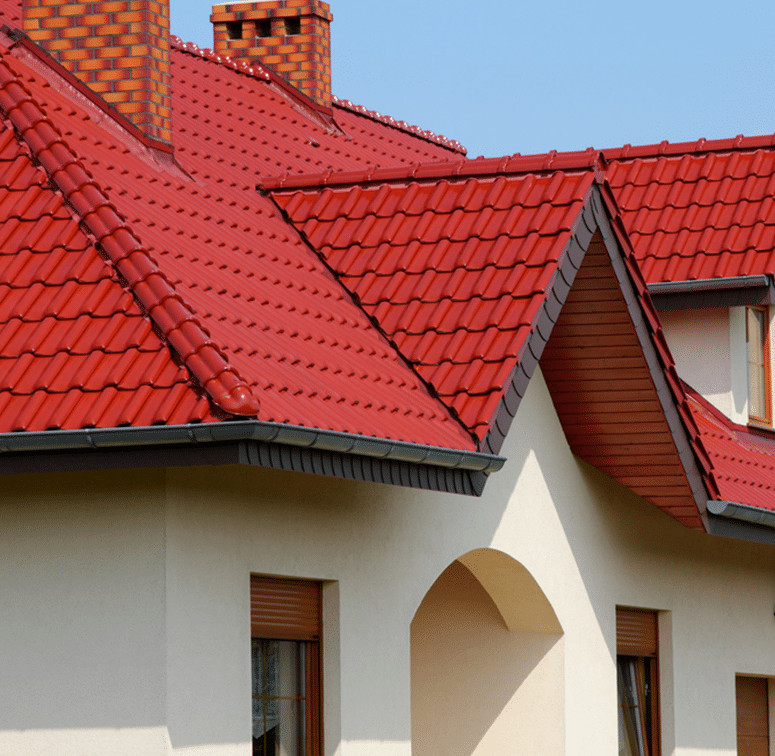
Tile and slate roofing systems deliver the strongest noise insulation performance of any common residential roofing material due to their high density and mass. Clay and concrete tiles absorb 25 to 35 percent more noise than standard asphalt shingles, while natural slate is non-resonant and forms a dense sound barrier against rain, hail, traffic, and aircraft noise.
Clay and Concrete Tile Roof Acoustics
Clay and concrete tile roofs achieve their acoustic advantage through material density and installation geometry. Clay tiles typically weigh 6 to 10 pounds per square foot, while concrete tiles range from 9.5 to 12 pounds per square foot. That mass physically resists the vibration that transmits sound into the roof structure. Key acoustic properties of tile roofing include:
- High Density Mass: Absorbs 25 to 35 percent more noise than standard asphalt shingles, attenuating both impact noise and airborne sound transmission.
- Micro-Perforated Surface Design: Modern acoustic tile profiles feature textured and perforated surfaces that trap and diffuse sound waves before they reach the underlayment layer.
- Air Gap Between Tiles: The natural spacing created by a tile installation provides a secondary air buffer that further reduces sound transmission into the roof deck.
- Weight-Based Structural Requirement: Tile’s substantial weight requires a structural load assessment before installation, particularly for older New Orleans residential properties.
Natural Slate Roofing as an Acoustic Noise Barrier
Natural slate absorbs and diffuses sound waves at the point of surface contact rather than transmitting vibration through the roof deck. Unlike metal panels or lightweight shingles, slate does not resonate under impact. Key acoustic properties of natural slate include:
- Non-Resonant Stone Composition: Slate does not vibrate or carry impact sound the way metal panels do, producing naturally quiet indoor conditions under rain, hail, and wind.
- Dense Stone Tile Thickness: Each slate tile ranges from a quarter-inch to three-eighths inch thick as the industry standard, creating a dense physical barrier against traffic rumble, aircraft noise, and hail impact.
- Surface-Level Sound Absorption: Slate absorbs and diffuses sound energy at the point of contact rather than transmitting that vibration through the roof deck and into interior spaces.
- Optimal Acoustic Assembly: Paired with a solid roof deck and mineral wool attic insulation, natural slate produces one of the lowest indoor ambient noise levels of any residential roofing system.
How Does a Flat Roof Affect Noise Control Inside a Home?
Flat roofs face greater acoustic challenges than pitched surfaces because rain and debris strike at a near-perpendicular angle, generating higher impact noise levels. EPDM and TPO membrane systems deliver meaningful sound dampening for flat roof assemblies when specified at sufficient membrane thickness.
EPDM Rubber Membrane Noise Performance
EPDM rubber membranes absorb up to 70 percent of impact noise from rain and hail, with premium membranes reaching STC ratings between 45 and 52. Membrane thickness is the primary acoustic variable, with 60 to 90 mil specifications delivering the strongest sound transmission loss. Seamless EPDM installation eliminates the penetration points where impact noise typically enters the interior assembly.
TPO Membrane Noise Performance
 TPO single-ply membranes provide comparable sound dampening to EPDM while adding UV reflectivity, making them well-suited for New Orleans flat roof systems where heat load and storm exposure combine year-round. Their single-ply construction reduces structural vibration transmission and maintains consistent acoustic performance across the full Louisiana temperature range, from winter lows to peak summer heat.
Mineral Wool Insulation as a Flat Roof Acoustic Layer
Pairing any flat roof membrane with mineral wool insulation produces the strongest overall sound attenuation in the full assembly. Mineral wool carries greater bulk density than standard fiberglass batts, trapping sound waves across a wider frequency spectrum according to the North American Insulation Manufacturers Association. Its moisture resistance adds structural durability in the high-humidity coastal climate of the greater New Orleans area.
Talk to a Roofing Expert in New Orleans Today
Choosing the right roofing material and assembly for your home is one of the most effective long-term investments in both structural protection and indoor comfort. Dense materials like slate and tile lead in noise performance, while metal and asphalt systems achieve strong results with the right acoustic upgrades. Every home and noise environment is different, and the best outcome comes from a system built to match both.
TurnKey Roofers is a licensed and certified New Orleans roofing company serving residential and commercial clients across Louisiana with installation, replacement, and roofing-type consultation.
Call us at 504-732-0336 today to schedule your free estimate and find the right roofing system for your home’s noise and weather needs.
Frequently Asked Questions
Which roofing material provides the best noise control for a home?
Natural slate and clay or concrete tile deliver the strongest residential noise control due to their high density and non-resonant stone or ceramic composition. Both material types absorb and diffuse sound energy at the surface before it enters the roof deck assembly. Paired with acoustic underlayment and mineral wool attic insulation, they achieve the highest sound transmission loss of any common roofing type.
Can I improve my roof’s noise performance without a full replacement?
Yes. Adding acoustic underlayment during a re-roof, increasing attic insulation depth with mineral wool, and sealing all roof deck penetrations can meaningfully improve indoor sound control without replacing the surface material. These upgrades address separate parts of the acoustic assembly and are compatible with any existing roofing type.
What is a good STC rating for a residential roof?
A residential roof assembly with an STC rating between 45 and 55 provides strong noise reduction in most urban and suburban environments. Asphalt shingle systems with acoustic underlayment typically reach STC 52 to 54. EPDM membrane flat roof systems achieve STC 45 to 52. Natural slate and dense clay tile assemblies can exceed both benchmarks depending on the full system specification.
Are metal roofs noisier than shingle roofs inside the home?
Without insulation or underlayment, metal roofing amplifies rain and hail impact noise significantly more than asphalt shingles. With a complete assembly including acoustic underlayment, mineral wool attic insulation, and thicker gauge panels, a metal roof system performs at comparable indoor decibel levels to an equivalent asphalt shingle installation. The full roof assembly determines final acoustic performance.
Does roof pitch affect how loud a roof sounds inside?
Yes. Steeper pitches reduce the angle of impact when rain and hail strike the surface, lowering the intensity of impact sound transmitted through the roof deck. High-pitched residential roofs consistently produce lower indoor noise levels than low-slope or flat roof surfaces under equivalent storm conditions, which is one reason steeply pitched roofs are favored in storm-heavy markets like New Orleans.
How does attic insulation affect roof noise control?
Attic insulation functions as a secondary acoustic barrier after sound passes through the outer roofing layers and roof deck. Mineral wool insulation from manufacturers such as ROCKWOOL provides superior sound attenuation compared to standard fiberglass batts because its higher bulk density traps more sound energy across a broader frequency range. Pairing any roofing surface material with mineral wool attic insulation produces the most consistent noise reduction performance.
Common questions about working with us
Yes we do, we offer 50 year non pro-rated warranty and 10 year workmanship warranty. We also offer 15 year unlimited wind warranty even from a named storm.
Turnkey roof repair is a comprehensive service where the entire roof repair process is managed from start to finish by a single provider. This includes assessment, planning, execution, and final inspection.
The TurnKey process includes a thorough roof inspection, detailed project planning, sourcing of materials, execution of repairs, and a final inspection to ensure quality and client satisfaction.