
Standing Seam Metal Roofing and How the Panels Lock Together
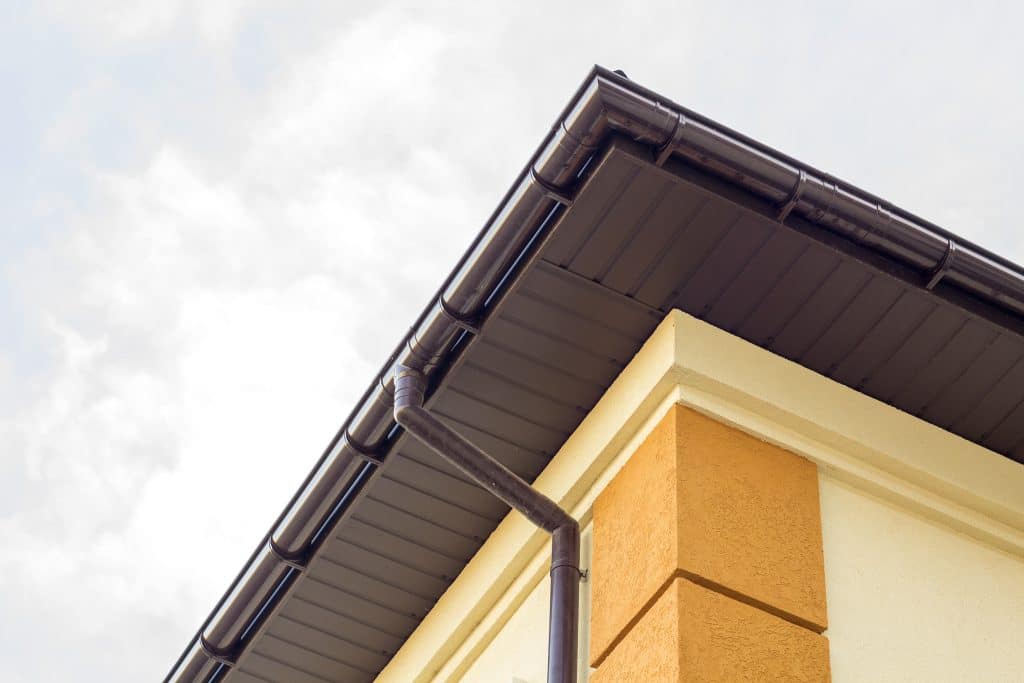
A standing seam roof looks simple from the street: long panels running eave to ridge with raised ribs between them. The engineering sits inside those ribs, in a small metal clip you’ll never see once the roof is finished.
That clip is what lets a metal panel grow and shrink all day without tearing its own fasteners out. TurnKey Roofers installs these across the New Orleans area, and this is how the system actually works.
For pricing on your own roof, reach us through the contact page or call (504) 732-0336.
Key takeaways
- Standing seam panels are held by concealed clips inside the seam, so no fastener penetrates the weathering surface of the panel.
- The Metal Construction Association describes the clip’s primary job as enabling dimensional change of the panel without fatigue of its fastening.
- Panel temperatures can swing more than 200 degrees Fahrenheit in a season, 150 degrees in a single day and 100 degrees within minutes.
- A common rule of thumb is about 1/8 inch of thermal expansion for every 10 feet of panel length, so an 80 foot panel needs to absorb a full inch.
- Snap-lock panels typically use one-piece clips, while mechanically seamed panels use two-piece sliding clips.
- HomeGuide puts metal roofing at $5 to $16 per square foot installed, with metal roofs lasting 30 to 80 or more years.
What makes a seam a standing seam
On a face-fastened metal roof, screws go through the panel and into the structure, with a rubber washer sealing each hole. On a standing seam roof, the panel edges are formed into vertical legs that interlock with the neighbouring panel, and the fastening happens inside that joint.
The Metal Construction Association explains that panel side joints are designed and proportioned to nest precisely with the side joint of the next panel. That connection is either a male and female interlock or twin male edges closed with a separate cap.
Because the clips are concealed, MCA notes they aren’t subject to fastener corrosion, seal deterioration or thermal-induced hole elongation. Those three failure modes are exactly what limits the life of an exposed-fastener roof.
Thermal movement is the problem the clip solves
Metal expands when it heats and contracts when it cools, and a roof panel does this constantly. MCA describes the cycle as running season to season, day to night, hour to hour and even minute to minute as cloud cover cuts the sunlight and a cool rain starts.
The association puts numbers on it. Panel temperatures may range more than 200 degrees Fahrenheit across a season, 150 degrees in a single day and 100 degrees within minutes.
Metal Construction News offers a working figure for what that means dimensionally: roughly 1/8 inch of thermal expansion for every 10 feet of panel length. An 80 foot panel therefore has to accommodate a full inch of movement, which is far more than a screw through a hole will tolerate over thousands of cycles.
The two clip families
One-piece clips
A one-piece clip fastens directly to the structure and stays put. With most snap-fit panel systems, the clip engages the panel so it can slide along the clip axis with only minimal friction.
Metal Construction News describes one-piece clips as giving essentially unrestricted thermal movement, since the panel moves freely within the seam. Where the seam is machine-folded around the clip instead, the connection becomes fixed, and the panel can only move through limited flexure of the clip or the structure.
Two-piece sliding clips
A two-piece clip has a lower half fastened to the structure and an upper half that engages the panel seam. The movement happens between the two halves rather than between the clip and the panel.
MCA notes this design is commonly used on longer panels and on flexible structures, and that most clips of this type have a limit on the maximum panel movement they can absorb. That limit is why panel length and clip selection have to be decided together.
| Feature | One-piece clip | Two-piece sliding clip |
|---|---|---|
| Construction | Single stationary piece fixed to the structure | Interlocking upper and lower components |
| Usual panel type | Snap-lock seams | Mechanically seamed profiles |
| How movement happens | Panel slides along the clip | Slotted interface between the two halves |
| Movement limit | Largely unrestricted, per Metal Construction News | Limited by the clip design |
| Typical application | Shorter panel runs | Longer panels and flexible structures |
Seaming: snap-lock versus mechanically seamed
A snap-lock panel is pressed down until the female leg clicks over the male leg. No tool folds the metal, which makes it faster to install and easier to replace a single panel later.
A mechanically seamed panel gets folded closed by a powered seaming machine that travels the length of the ridge to eave run. MCA notes that many systems call for hand seaming or crimping at each clip first, which gives the panels a temporary hold and reduces the power the machine needs to drive over a clip.
Skipping that step has consequences. MCA warns that an infraction of these guidelines can completely downgrade the wind uplift capacity of the roof and hurt the assembly’s ability to handle thermal expansion and contraction.
Details that separate a good install from a bad one
- Clip matched to the panel. MCA states that clip designs are specific to the dimensional characteristics and seam design of a particular panel profile, often to a particular manufacturer.
- A defined point of fixity. Panels migrate under drag loads from foot traffic and wind, so MCA says they must be fixed to the structure at a single location, either with fixed clips or by screw-fastening at a specific point.
- Clip spacing worked out by zone. A clip analysis sets spacing separately for the field of the roof, the leading and trailing edges and the outside corners, where uplift is highest.
- Sealant continuity in the seam. Some systems carry sealant between the male and female components, and MCA notes a clip can breach that bead unless it is designed with integral sealant to marry with it.
- Correct fasteners. MCA’s service life work recommends 300 series stainless steel fasteners and warns that 400 series will require replacement.
Get any of those wrong and the visible symptoms show up later as oil canning, noise from the roof as it moves, buckled panels or distressed fasteners. MCA lists all of those as consequences of inadequate attention to clip travel and movement capacity.
How long a standing seam roof lasts
MCA published a service life assessment of low-slope unpainted 55 percent aluminium-zinc alloy coated steel standing seam roofs, based on field inspections of 14 roofs with up to 35 years of service plus laboratory corrosion analysis. The finding was that a similar roof built today with best practices can be expected to exceed 60 years in a wide range of environments.
The limiting factor was not the metal. MCA concluded that butyl sealant life will be the deciding factor in establishing end of life for these roof systems, conservatively projected at 60 years, while panel corrosion rates projected flat panel service lives from 60 to 375 years depending on local precipitation pH.
Maintenance still matters. The study recommends periodic cleaning at least twice a year where debris collects, and cleaning at five year intervals even in wet climates prone to algae growth, which describes ours well.
What it costs
- HomeGuide puts metal roofing generally at $5 to $16 per square foot installed, or $7,500 to $40,000 on average depending on metal type and gauge.
- Galvalume and galvanized steel sit at the budget end of that range, with copper, zinc and stainless costing the most.
- Roofing material prices run $100 to $800 per square for metal, against $80 to $250 per square for asphalt shingles.
- HomeGuide reports metal roof replacement taking 1 to 5 days, against 1 to 3 days for asphalt shingles.
- The EPA lists metal shingles and panels with reflective coatings among cool roof products, which is worth asking about for a west-facing slope here.
Standing seam on a New Orleans house
Metal panels aren’t unusual here. They show up on Creole cottages, on porch and gallery roofs, and increasingly on new builds across Lakeview and Mid-City.
The city treats a metal re-roof the same way it treats shingles. Under Ordinance 30,235 MCS, a residential re-roofing permit is required for any roof replacement affecting 50 percent or more of a single or two family home, and the city’s photo requirements specifically list installation of shingles or metal panels as one of the four stages you’ll document.
Wind is the other local factor. Louisiana’s basic wind speed runs from 90 mph in the north of the state to 150 mph at the southeastern tip, and that number drives the clip spacing and uplift requirements an engineer will work to.
You’ll also want to think about what sits on the roof. Satellite mounts, solar and skylights all need planning before the panels go down, because you don’t want anyone drilling through a finished standing seam roof later.
Frequently asked questions
Is a standing seam metal roof better?
For longevity and wind performance it usually is, and the reason is structural rather than cosmetic. MCA notes that concealed clip systems avoid fastener corrosion, seal deterioration and thermal-induced hole elongation, which are the three things that age an exposed-fastener metal roof. MCA’s own service life work projects more than 60 years for a properly built standing seam system, against the 15 to 30 years HomeGuide reports for asphalt shingles.
What are the disadvantages of a standing seam roof?
Cost and installation sensitivity are the two real ones. HomeGuide puts metal roofing at $5 to $16 per square foot installed against $3 to $6 for asphalt, and the system depends on details a homeowner can’t inspect after the fact, including clip selection, clip spacing by roof zone and the point of fixity. MCA also warns that a clip which fits poorly can produce visible read-through, where the sheet metal deforms noticeably, and that inadequate movement capacity leads to panel buckling and noise.
Are standing seam metal roofs more expensive?
Yes, on day one. HomeGuide’s material figures put metal at $100 to $800 per square against $80 to $250 per square for asphalt shingles, before labour. The comparison changes over a longer horizon, since HomeGuide reports metal roofs lasting 30 to 80 or more years and MCA’s field study projects more than 60 years for 55 percent aluminium-zinc coated standing seam.
Can a standing seam panel be replaced on its own
It depends on the seam type. A snap-lock panel can often be unclipped and swapped, while a mechanically seamed panel has been folded closed around its clips and has to be unseamed to come out. That difference is worth raising before you choose a profile, particularly on a roof with satellite mounts, skylights or other penetrations that may change later.
Ask for the clip and seam details in writing
A metal roof estimate should name the panel profile, the clip type, the seam method and the fastener grade. You can see the systems we install on our metal roof page and how we handle the work on the roof installation page.
Call (504) 732-0336 for a free estimate and we’ll measure the runs and talk through the options.
Related reading
- Exploring Stone-Coated Steel Roofing for Long-Term Durability
- How Roofing Types Affect Noise Control Inside Your Home
Sources
- Metal Construction Association, Standing Seam Roof Clips Best Practices Guide
- Metal Construction Association, Service Life Assessment of Low-Slope Metal Roof Systems
- Metal Construction News, The FAQs of Standing Seam Panel Clips
- HomeGuide, Roof Replacement Cost (2026)
- US EPA, Using Cool Roofs to Reduce Heat Islands
- City of New Orleans, Residential Re-Roofing Permit
- LSU AgCenter, Consumer’s Guide to Code-Compliant Roofing Installations
Common questions about working with us
Yes we do, we offer 50 year non pro-rated warranty and 10 year workmanship warranty. We also offer 15 year unlimited wind warranty even from a named storm.
Turnkey roof repair is a comprehensive service where the entire roof repair process is managed from start to finish by a single provider. This includes assessment, planning, execution, and final inspection.
The TurnKey process includes a thorough roof inspection, detailed project planning, sourcing of materials, execution of repairs, and a final inspection to ensure quality and client satisfaction.
The duration varies based on the extent of damage and the size of the project. A professional assessment will provide a more accurate timeline.
Look out for signs such as leaks, missing or damaged shingles, sagging areas, or visible water damage in your ceiling. If you’re unsure, a professional assessment is recommended.
We work across New Orleans and 13 more communities: Metairie, Kenner, Harahan, River Ridge, St. Rose, Gretna, LaPlace, Covington, Mandeville, Madisonville, Slidell, Hammond and Baton Rouge. Call 504-732-0336 and we’ll confirm we cover your street.
Yes. Our 15-year unlimited wind warranty applies even when the damage comes from a named storm. It sits alongside our 50-year non-prorated warranty and 10-year workmanship warranty.
It depends on the size and pitch of the roof, the material you choose, and whether any decking or flashing needs replacing. After a free roof inspection, we give you a plan and a quote. For a breakdown by material and roof size, read our guide to roof replacement cost in New Orleans.