

Missing Shingles After High Wind and How Soon to Replace Them
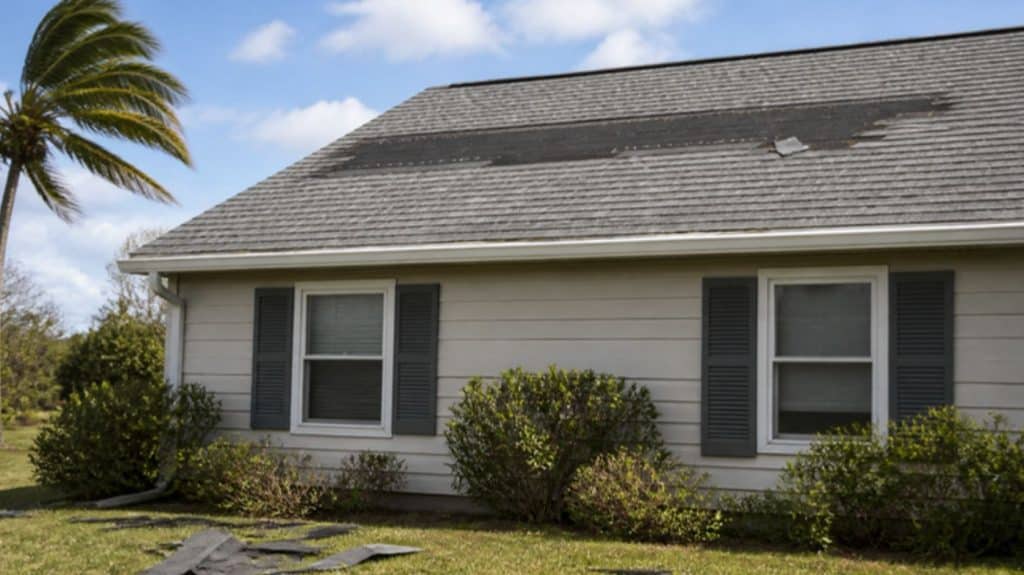
A gap where a shingle used to be is not a cosmetic problem. It’s an opening in a layered system, and the layers above and below it start failing from that point outward.
This covers what a missing shingle actually exposes, why wind takes some roofs and not others, and how quickly the gap needs closing. TurnKey Roofers handles wind damage repairs around New Orleans, and you can reach us on the contact page or at (504) 732-0336.
Spotting the gap is a ground level job. Walking a roof that just lost shingles means walking on unknown deck condition, so leave that part to a crew with anchors.

Key takeaways
- A missing shingle exposes the underlayment, and underlayment is a secondary barrier rather than a finished roof surface.
- IBHS research names the strength of the seal between shingles as the most important factor in high wind performance.
- ARMA describes shingle sealant as an asphalt based, heat activated material that bonds when sun and ultraviolet light warm it.
- The code requires at least four fasteners per strip shingle, and short nailing is the most common reason a roof loses courses.
- Once one shingle goes, the exposed edge of the next one up becomes the new target for uplift.
- Replace within days rather than weeks, and sooner if rain is forecast or the exposed area is large.
What a missing shingle actually exposes
Shingles work as overlapping courses, so any one of them is covering the nail heads and the top edge of the course below. Pull one out and you’ve opened three things at once.
| What is exposed | Why it matters | How fast it becomes a problem |
|---|---|---|
| Underlayment | Built as a secondary barrier, not a wearing surface | Weeks in sun and wind |
| Nail heads of the course below | Each one is a hole through the underlayment | Immediately in driving rain |
| The top edge of the shingle below | Designed to be covered, not to shed water | The next heavy rain |
| The sealant line of the course above | Now unsupported and catching wind | The next gust front |
| Roof deck, where underlayment also tore | Bare wood taking direct water | Hours |
That last row is the one that costs money. Wet sheathing swells, delaminates and has to be replaced, and it takes the insulation below down with it.
How wind gets a shingle off a roof
Wind doesn’t push shingles off. It lifts them, by flowing over the roof and creating suction on the upper surface while pressure builds underneath the tab.
Two things resist that. The nails hold the top of the shingle to the deck, and the factory sealant strip bonds the bottom of the shingle to the course beneath it.
IBHS puts the emphasis on the second one. Its research identifies the strength of the seal between shingles as the most important factor affecting high wind performance in self sealing asphalt shingles.
ARMA describes that sealant as an asphalt based, heat activated bonding material, and notes that heat and ultraviolet light from the sun are what soften it into a bond. A roof that never got the sun and heat to set the seal is a roof carrying a weak point across every course.
Why some roofs lose shingles and neighbors don’t
- Installation temperature. ARMA recommends installing when temperatures are well above freezing, because the sealant needs warmth to bond.
- Shaded slopes. A north facing plane under oak cover gets less direct sun, so the seal sets more slowly than on the sunny side of the same roof.
- Job site conditions. ARMA warns against working through heavy rain, dust, snow and high winds, all of which interfere with bonding.
- Nail count and placement. The code sets a floor of four fasteners per strip shingle and two per individual shingle, and high wind specifications often call for more.
- Nail type. Fasteners have to be galvanized steel, stainless steel, aluminum or copper roofing nails, minimum 12 gage with a 3/8 inch head, driven so the head sits flush.
- Wind class of the product. Shingles are classified D, F, G or H against ultimate design wind speeds from 110 mph to 194 mph, and a coastal site needs the higher classes.
- Steep slopes and hand sealing. IBHS notes hand sealing is required on steep slope surfaces and during extended cold weather installation.
Age belongs on that list too. Sealant bonds weaken as the asphalt hardens over the years, so a fifteen year old roof gives up tabs in a wind that a five year old roof shrugs off.
Roof geometry plays a part as well. Corners, rake edges and ridges see higher uplift pressure than the middle of a slope, which is why damage clusters at the edges of a roof rather than spreading evenly.
That list explains most of the street where one house loses a slope and three others don’t. It’s usually installation rather than luck.
How soon to replace missing shingles
- Same day, if rain is coming. A tarp or a temporary cover over the exposed area beats waiting for a matching bundle.
- Within a few days, in dry weather. Underlayment holds out for a while, but sun and wind degrade it and the exposed nail heads are open paths.
- Immediately, if the deck is showing. Bare sheathing is on an hours clock, not a days clock.
- Same visit for the courses around it. A shingle rarely leaves alone, and the neighbors have usually broken their seal even if they’re still in place.
- Before the next named storm. Gaps grow. The exposed edge of the shingle above a missing one is the next thing wind gets under.
Putting it off for a season is where a hundred dollar repair turns into decking, underlayment and a slope of shingles. Our roof repair page covers how these jobs get scoped.
What a proper wind repair involves
Replacing a missing shingle is not a one piece operation. The shingle above has to be lifted and its sealant broken to expose the nails, which means the courses around the gap get handled too.
The crew pulls the damaged pieces, checks the underlayment underneath for tears, and patches or replaces that layer before anything goes back on. Skipping that step leaves the hole that caused the leak still there, just hidden.
New shingles go in with the full fastener count, nailed in the manufacturer’s nailing zone rather than wherever is convenient. High on the shingle and the nail misses the course below, low and it sits in the exposed area where water reaches it.
The lifted courses are then hand sealed, since their factory sealant was broken during the repair and won’t re-bond on its own. That last step is the one most often skipped on a quick patch.
Matching and what to expect from a repair
Color is the first thing homeowners ask about, and the honest answer is that a repair patch will show at first. Granule color shifts with sun exposure, so new shingles sit brighter than a roof that’s been up for years.
The gap narrows over a couple of seasons as the new material weathers. On a highly visible slope, some owners choose to pull replacement material from a less visible plane and put the new shingles there instead.
Ask for the leftover bundles to stay on site after any roof job for this exact reason. A few spare shingles from the original run solve the matching problem completely.
Discontinued product lines are the harder problem. If the original shingle is no longer made, the choice is a close match, a full slope, or a full replacement, and that depends on how much roof is left in the covering.
Our shingle roofing page lists the lines we carry, which is the starting point for matching an existing roof.
What to check after a wind event
- Walk the perimeter and look for shingle pieces. Tabs in the yard, in the gutters or against the fence tell you the roof gave something up.
- Look at the ridge and hips from the ground. Cap shingles sit highest and go first.
- Scan each slope for a lighter rectangle. Exposed underlayment reads as a flat, slightly different colored patch.
- Check for lifted tabs, not just missing ones. A shingle standing slightly proud has broken its seal and will go in the next blow.
- Look at the rake edges. Wind gets under the gable edge first, so damage often starts there and works inward.
- Check the attic after rain. Dark streaks on the underside of the sheathing mark water that got past the covering.
Any of those means a call. The wind side of the specification on our own installs is covered on the unlimited wind warranty page.
Frequently asked questions
Are missing shingles a big deal?
Yes, more than they look. The gap exposes underlayment that was built as a backup layer rather than a finished surface, along with the nail heads of the course below. It also gives wind an edge to work under, so one missing shingle tends to become several.
What happens if shingles are missing?
Water reaches the underlayment directly, and any nail hole or tear in that layer becomes a path to the deck. Sun and wind degrade the exposed underlayment faster than it was ever meant to weather. On the next windy day, the unsupported edges around the gap are the first thing to lift.
How long can a roof go with missing shingles?
Days, not months, and hours if the deck is showing. In dry settled weather the underlayment will hold for a short while, though every rain and every gust widens the problem. Rain in the forecast turns it into a same day job.
Why did my roof lose shingles when my neighbor’s did not?
Usually installation rather than luck. Nail count, nail placement, the wind classification of the product, and whether the sealant strips ever bonded properly all vary house to house. A slope that was installed in cold weather or sits in heavy shade seals more slowly than one that got sun on it right away.
Can I just glue a shingle back down?
A loose tab can sometimes be hand sealed as a stopgap by a roofer, but a missing shingle has to be replaced. Roofing cement smeared over a gap traps water and hides the damage without closing the path. It also complicates the proper repair later.
Close the gap before the next front comes through
Missing shingles are one of the few roof problems with a clear deadline attached. The roof stays watertight until the next rain, and then it doesn’t.
TurnKey Roofers will look at the damage, cover what needs covering, and give you a free estimate on the repair. Call (504) 732-0336 or send the details through the site.
Related reading
- How to prepare your roof for hurricane season
- How to tell if your roofing job was done poorly
- Warning signs your home needs a roofing contractor immediately
Sources
Common questions about working with us
Yes we do, we offer 50 year non pro-rated warranty and 10 year workmanship warranty. We also offer 15 year unlimited wind warranty even from a named storm.
Turnkey roof repair is a comprehensive service where the entire roof repair process is managed from start to finish by a single provider. This includes assessment, planning, execution, and final inspection.
The TurnKey process includes a thorough roof inspection, detailed project planning, sourcing of materials, execution of repairs, and a final inspection to ensure quality and client satisfaction.
The duration varies based on the extent of damage and the size of the project. A professional assessment will provide a more accurate timeline.
Look out for signs such as leaks, missing or damaged shingles, sagging areas, or visible water damage in your ceiling. If you’re unsure, a professional assessment is recommended.
We work across New Orleans and 13 more communities: Metairie, Kenner, Harahan, River Ridge, St. Rose, Gretna, LaPlace, Covington, Mandeville, Madisonville, Slidell, Hammond and Baton Rouge. Call 504-732-0336 and we’ll confirm we cover your street.
Yes. Our 15-year unlimited wind warranty applies even when the damage comes from a named storm. It sits alongside our 50-year non-prorated warranty and 10-year workmanship warranty.
It depends on the size and pitch of the roof, the material you choose, and whether any decking or flashing needs replacing. After a free roof inspection, we give you a plan and a quote. For a breakdown by material and roof size, read our guide to roof replacement cost in New Orleans.