
Architectural Shingles and 3 Tab Shingles Compared for Wind and Cost
Two asphalt shingles can sit on the same pallet, carry the same warranty length and behave completely differently in a 70 mph gust. The gap between architectural and 3-tab comes down to how they’re built and what that does to the seal.
The crew at TurnKey Roofers installs both, and on a Gulf Coast roof the choice usually isn’t close. Here is what separates them, and how to tell which one is already on your house.
If you’d rather skip to a recommendation for your own roof, the contact page gets you to us, or call (504) 732-0336.

Key takeaways
- A 3-tab shingle is one flat layer with two cutouts. An architectural shingle laminates a second layer onto the first, which adds thickness, weight and stiffness.
- LSU AgCenter states that laminated or architectural shingles provide more wind resistance than tabbed shingles.
- Wind performance depends on the self-seal bond and the shingle’s rigidity, which is why the heavier laminated product tends to test higher.
- HomeGuide’s 2026 figures put 3-tab at $3 to $5 per square foot installed and architectural at $4 to $6.
- Above 110 mph, LSU AgCenter says high-wind installation generally means six nails per shingle rather than four.
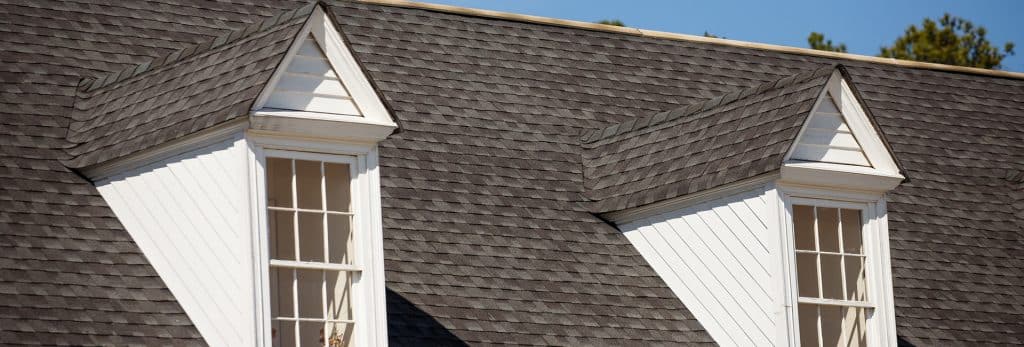
- You can tell them apart from the driveway: 3-tab reads as evenly spaced slots in straight lines, architectural reads as a broken, layered pattern.
How each one is built
A 3-tab shingle is a single strip of mat, coated and surfaced, cut with two slots along the bottom edge. Those cutouts create the three tabs the name comes from, and they’re what give a 3-tab roof its even, striped appearance.
An architectural shingle starts with a similar base and bonds a second layer of material to the lower portion. That laminated section is cut in irregular shapes, so the finished roof shows a broken shadow line rather than a repeating grid.
HomeGuide describes architectural shingles, also sold as 3D, laminate or dimensional, as thicker and longer lasting than 3-tab. The weight difference you feel carrying a bundle up a ladder is the same difference that shows up in a wind test.
Why the laminated shingle holds better in wind
Wind doesn’t usually tear a shingle in half. It gets under the leading edge, breaks the seal bond and peels the shingle back until the nails let go.
The National Roofing Contractors Association explains that a shingle’s mechanical uplift resistance depends on factors including the shingle’s rigidity and the bond strength of its self-seal strip. A stiffer, heavier shingle resists the initial lift, and a stronger bond keeps the tab down long enough for the gust to pass.
LSU AgCenter puts it directly in its Louisiana guidance: laminated or architectural shingles provide more wind resistance than tabbed shingles. That’s the practical reason most reputable re-roofs in Orleans and Jefferson parishes use laminated product now.
What the wind classifications actually say
Both types are classified under the same standards. Residential code accepts ASTM D3161 Class F or ASTM D7158 Class H for use at all wind speeds, and the wrapper has to be labelled with the classification it meets.
Under ASTM D7158-16, Class D covers ultimate design wind speed up to 115 mph, Class G up to 150 mph and Class H up to 190 mph. Under ASTM D3161, Class A is 60 mph, Class D is 90 mph and Class F is 110 mph.
NRCA adds a caution worth carrying into any sales conversation. ASTM D3161 itself states that its results do not directly correlate to wind speeds experienced in service, so a printed class is a comparison between products rather than a promise about a specific storm.
| Point of comparison | 3-tab | Architectural or laminated |
|---|---|---|
| Construction | Single flat layer with two cutouts | Second layer laminated to the base |
| Appearance | Flat and uniform, per HomeGuide | Thicker with a broken shadow line |
| Installed cost per square foot | $3 to $5, per HomeGuide | $4 to $6, per HomeGuide |
| Typical total, average roof | $5,700 to $12,000 | $7,500 to $16,000 |
| Wind resistance | Lower, per LSU AgCenter | Higher, per LSU AgCenter |
| Relative durability | Least durable asphalt option, per HomeGuide | Thicker and longer lasting |
Fastening is where the classification is won or lost
A high classification on the wrapper means nothing if the shingle is nailed like a budget roof. Code sets the floor at four fasteners per strip shingle, and manufacturers set their own minimums above it.
- Confirm the wind zone. Louisiana’s basic wind speed runs from 90 mph in the north of the state to 150 mph at the southeastern tip.
- Above 110 mph, specify the high-wind pattern. LSU AgCenter notes this generally means six nails per shingle instead of four.
- Use the right nail. Code calls for 12 gauge shank with a minimum 3/8 inch head, penetrating at least 3/4 of an inch into the sheathing or all the way through thinner deck.
- Drive them straight and flush. LSU AgCenter identifies overdriven, underdriven and crooked nails as a major source of wind-related roofing failures.
- Hit the nail line. Fastening above or below the reinforced strip pulls the holding power out of the shingle no matter which type you bought.
- Install proper starter strip at eaves and rakes so the first course bonds to the drip edge.
LSU AgCenter also recommends hot-dipped galvanized nails in coastal conditions, since electroplated galvanized products have a shorter life. In our salt air that’s not a small detail.
How to tell which one is on your roof now
- Stand back and look along a slope. Straight, evenly repeating vertical slots across every course means 3-tab.
- Look at the bottom edge shadow. A single crisp line all the way across is 3-tab, while a broken, staggered edge is architectural.
- Check thickness at a rake or a gable end where the courses are visible from the side. Laminated shingles are noticeably thicker.
- Look at a leftover bundle in the garage or shed if the previous owner left one. The wrapper carries the product name and the classification.
- Count the exposed courses over a known height. 3-tab exposure is typically shallower than a laminated shingle’s.
If you can’t tell from the ground, don’t climb up to check. A photograph taken from a second-floor window or a neighbour’s driveway answers it just as well.
Service life in a hot, wet climate
HomeGuide reports asphalt shingle service life at 15 to 30 years across the category. Where a particular roof lands in that range has as much to do with heat, ventilation and installation quality as it does with the grade of shingle.
The laminated product carries more asphalt and more mat per square foot, which gives it more material to lose before the mineral surface thins out. On a south or west facing slope in Metairie or Gretna, that extra mass buys real time.
Neither grade outlives poor attic ventilation. Heat building under the deck cooks the asphalt from below, and no shingle classification compensates for that.
Details that outrank the shingle grade
Once both products are installed correctly, several parts of the assembly matter more than which grade you picked. LSU AgCenter’s Louisiana guidance is specific about them.
- Synthetic underlayment. More wind-resistant than traditional felt, and it holds up better if the covering above it is stripped.
- Drip edge. Fastened to the deck at the eaves and over the underlayment at the rakes, where it anchors the underlayment against wind.
- Starter strip. A purpose-made shingle with adhesive placed to bond to the drip edge, extending about 3/4 inch past it.
- Sealed deck seams. 4-inch bitumen tape over the joints, with the decking sheets set an eighth of an inch apart for expansion.
- Deck fastening. Extra nails four inches apart at corners, ridges and eaves, where wind forces concentrate.
An estimate that lists a premium laminated shingle but stays silent on these items is telling you where the corners will be cut. Ask for them by name.
Where 3-tab still makes sense
Cost is the obvious case. HomeGuide’s figures put a 3-tab roof several thousand dollars below a laminated one on an average house, and on a rental, a shed or a detached garage that gap can decide the job.
Matching an existing roof is another. If half a roof was replaced two years ago with 3-tab and only one slope was damaged, matching the existing product keeps the roof looking like one roof.
What doesn’t hold up is using 3-tab on an exposed coastal elevation to save a few hundred dollars per square. IBHS tested basic 3-tab, impact-resistant 3-tab, basic architectural, impact-resistant architectural and premium architectural products side by side, and the category differences were significant enough to warrant testing them separately.
Frequently asked questions
What are the disadvantages of architectural shingles?
Cost is the main one. HomeGuide puts architectural shingles at $4 to $6 per square foot installed against $3 to $5 for 3-tab, which is $7,500 to $16,000 rather than $5,700 to $12,000 on an average roof. They’re also heavier, which means more labour on a complex roof with lots of hips and valleys, and the thicker profile takes more care to cut in around flashings and penetrations.
Do roofers still use 3 tab shingles?
Yes, though less often on full residential re-roofs in high wind areas. HomeGuide still lists 3-tab as the cheapest asphalt option and describes it as the least durable, so it tends to show up on outbuildings, rentals and repairs that need to match an existing 3-tab roof. For a primary residence in south Louisiana, LSU AgCenter’s wind guidance points toward the laminated product instead.
How to tell if you have 3 tab or architectural shingles?
Look at the pattern from the ground. A 3-tab roof shows evenly spaced vertical slots that line up course after course, giving the flat, uniform look HomeGuide describes. An architectural roof shows a staggered, layered edge with no repeating slot lines, and the shingles look visibly thicker where you can see them edge on at a gable end.
Does the shingle type change the nailing pattern?
The wind zone and the manufacturer’s instructions set the pattern, not the shingle grade on its own. Code requires at least four fasteners per strip shingle, and LSU AgCenter notes that above 110 mph high-wind installation generally calls for six nails per shingle. Either type installed with the wrong pattern or with overdriven nails will underperform its printed classification.
Get the shingle and the nailing pattern specified in writing
Ask for the product name, the wind classification and the nail count on the estimate. We put all three on ours, and you can see the rest of our approach on the roof installation and shingle roofing pages, plus details of the unlimited wind warranty we offer.
Call (504) 732-0336 for a free estimate and we’ll walk the options with you.
Related reading
- How to Tell If Your Roofing Job Was Done Poorly
- 5 Questions Every Homeowner Should Ask Before Roof Work Begins
Sources
- HomeGuide, Roof Replacement Cost (2026)
- LSU AgCenter, Consumer’s Guide to Code-Compliant Roofing Installations
- LSU AgCenter, Roofing to Resist Wind and Rain Damage
- UpCodes, Classification of Asphalt Shingles
- Professional Roofing (NRCA), The wind resistance of shingles
- IBHS, Relative Impact Resistance of Asphalt Shingles
Common questions about working with us
Yes we do, we offer 50 year non pro-rated warranty and 10 year workmanship warranty. We also offer 15 year unlimited wind warranty even from a named storm.
Turnkey roof repair is a comprehensive service where the entire roof repair process is managed from start to finish by a single provider. This includes assessment, planning, execution, and final inspection.
The TurnKey process includes a thorough roof inspection, detailed project planning, sourcing of materials, execution of repairs, and a final inspection to ensure quality and client satisfaction.
The duration varies based on the extent of damage and the size of the project. A professional assessment will provide a more accurate timeline.
Look out for signs such as leaks, missing or damaged shingles, sagging areas, or visible water damage in your ceiling. If you’re unsure, a professional assessment is recommended.
We work across New Orleans and 13 more communities: Metairie, Kenner, Harahan, River Ridge, St. Rose, Gretna, LaPlace, Covington, Mandeville, Madisonville, Slidell, Hammond and Baton Rouge. Call 504-732-0336 and we’ll confirm we cover your street.
Yes. Our 15-year unlimited wind warranty applies even when the damage comes from a named storm. It sits alongside our 50-year non-prorated warranty and 10-year workmanship warranty.
It depends on the size and pitch of the roof, the material you choose, and whether any decking or flashing needs replacing. After a free roof inspection, we give you a plan and a quote. For a breakdown by material and roof size, read our guide to roof replacement cost in New Orleans.