

Tile Roof Repair and When Cracked Tiles Need Replacing
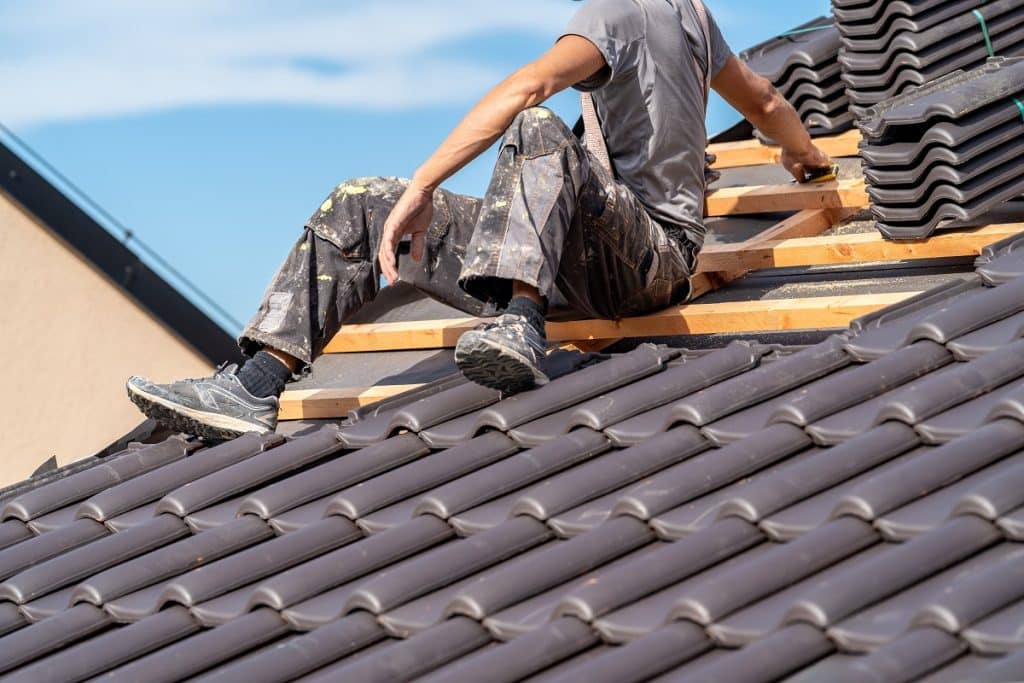
Clay tile has one of the longest life expectancies of any roofing material. The National Park Service puts it at around 100 years and often several hundred, which means the tile is rarely the thing that gives out first.
What fails is the system holding it: the nails, the battens, the underlayment and the flashing. A tile roof repair is usually about one of those, with a few broken tiles as the visible symptom. Our tile roof page covers the work, and the TurnKey Roofers homepage has the rest.
To get a cracked or slipped tile looked at, call (504) 732-0336 or use the contact page.

Key takeaways
- Tile roofs typically fail at the fasteners, battens and underlayment rather than at the tile.
- Broken tiles break the continuous waterproof surface, so they get replaced promptly rather than left.
- Nailheads are meant to protrude slightly. A nail driven too deep cracks the tile it’s holding.
- Replacement tiles that can’t be nailed get held by a copper tab or a slate hook, which works in place of a nail.
- Replacing individual tiles costs $60 to $125 each where there’s no damage underneath.
- Louisiana’s code bars roofing over an existing clay tile roof and bars reinstalling cracked or broken tile.
Why tiles crack
Most cracked tiles have a cause you can name, and naming it changes whether the repair is five tiles or a section.
- Nails driven too deep. The Park Service is specific here: tiles hang on their nails, nailheads should be left protruding slightly, and driving them too far into the furring strips puts pressure on the tile that breaks it under thermal movement or foot traffic.
- Careless foot traffic. Roofers walking an unprotected tile roof during a repair are listed as a direct cause of breakage.
- Overhanging branches and falling limbs. Common on older New Orleans lots with mature trees close to the house.
- Heavy hail. Impact cracks that may not show from the ground.
- Porous or underburned tile. Efflorescence of soluble salts on the surface can indicate excessive porosity from underburning during manufacture, and porous tiles let moisture in.
- Debris and backed up water. Gutters and downspouts full of debris let water seep under tiles, which rots battens, sheathing and the fastening system.
When a cracked tile has to go
Not every hairline mark means a replacement, but the threshold is lower than people expect. A broken tile no longer provides a continuous waterproof surface, so water reaches the underlayment and eventually the structure.
Replace the tile when any of these are true.
- The crack runs through the tile rather than chipping an edge, so water has a path.
- A piece is missing, whatever the size.
- The tile has slipped out of position or is sitting loose under hand pressure.
- The surface is spalling or flaking, which points to moisture already inside the body of the tile.
- The tile sits in a valley, at a hip, or beside a penetration, where the water volume is highest.
A cosmetic edge chip on a field tile in the middle of a slope, with the underlayment sound beneath it, is worth noting and monitoring rather than disturbing three neighboring tiles to fix.
How a tile gets replaced
The method the Park Service describes is the same one a good tile roofer uses today.
- Slide a slate ripper or a hacksaw blade under the broken tile and cut the nail or nails holding it.
- Remove the pieces without levering against the tiles either side.
- If the overlapping courses cover the nail holes, nailing the replacement isn’t possible, so an alternative fastening is needed.
- Nail a tab of double thickness copper stripping to the sheathing below the tile position.
- Slide the replacement tile in and secure it by bending the copper strip up over the tile, with a double thickness of copper across it. A slate hook, sometimes called a tingle, does the same job.
That copper tab is the detail that separates a repair which lasts from one that slides out in the next storm. It also explains why a proper tile repair costs more than the tile itself suggests.
Matching a tile you can’t buy anymore
Older profiles go out of production, and a close match is often the best available. The Park Service suggests a trick worth asking your roofer about.
Relocate original tiles to the prominent, visible parts of the roof where damage has occurred, and put the new replacement tiles in secondary or rear locations. Behind chimney stacks, parapets and dormer windows all work, and the front elevation keeps its original material.
Underlayment does more work than people think
On a tile roof the tiles shed most of the water, and the underlayment beneath handles what gets past them. When a tile roof leaks without any broken tiles in sight, that layer is usually the answer.
Louisiana’s 2021 International Residential Code requires double underlayment on clay and concrete tile roofs at slopes from 2.5:12 up to 4:12. That means a 19 inch starter strip at the eave, then 36 inch wide sheets overlapping successive courses by 19 inches, with 4 inch end laps offset by 6 feet.
Underlayment has its own clock. HomeGuide puts roofing felt at 15 to 30 years, with leaks appearing once it’s worn out, and replacing felt under tile at $650 to $1,400 per 100 square feet including removing and reinstalling the tile.
What the code requires on tile
- Clay and concrete tile is permitted on slopes of 2.5:12 or greater, with double underlayment required from 2.5:12 up to 4:12.
- Valley flashing must extend at least 11 inches from the centerline each way and carry a splash diverter rib at least 1 inch high at the flow line, with end laps of at least 4 inches.
- Flashing and counterflashing at vertical surfaces must be corrosion resistant metal of at least 0.019 inch, which is No. 26 galvanized sheet gauge.
- Existing clay or cement tile may be reinstalled, but damaged, cracked or broken tile must not go back on.
- A roof recover is not permitted where the existing covering is clay, cement or slate tile.
The Park Service adds a materials note on flashing: copper or lead gutters, flashings and valleys of at least No. 26 gauge, 20 to 24 ounce, extending a minimum of 12 inches under the tile from the edge. Given the tile’s life, the metal alongside it is worth buying properly.
What tile repair costs
HomeGuide’s 2026 figures put tile roof repair at $500 to $2,500 on average, or $5 to $25 per square foot, with individual tile replacement at $60 to $125 per tile where nothing underneath is damaged. Fixing a tile roof leak runs $200 to $900.
By comparison, a full tile roof costs $7 to $25 per square foot installed, or $10,500 to $62,500, with concrete at the low end and clay and terracotta above it. Against those numbers, replacing 30 tiles and a run of valley metal is a modest job.
Order spares while you’re at it. The Park Service notes that tile orders normally include an allowance of roughly 10 to 20 percent for breakage plus extra tiles stored for later repairs, and a homeowner with a box of matching tile in the garage has solved the hardest part of the next repair.
How tiles are held down, and why it varies
The fastening method changes with the tile profile, and it changes what a repair involves. Knowing which you have saves a guessing conversation with your roofer.
- Spanish or S tiles. One piece interlocking tiles with a convex barrel and a flat section, usually laid on sheathing or felt and fastened with two nails through holes at the top, sometimes mortared instead.
- Barrel or mission tiles. A two piece system where the concave pan tiles are nailed in vertical rows first, then the convex cover tiles overlap the joints between them, fixed with long nails, hooks or hangers.
- Plain flat tiles. Attached to the sheathing with nails only and lapped by almost half their length, which makes a much heavier roof than an interlocking system.
- Interlocking flat tiles. These form a single unbroken layer without the deep overlap, so the roof weighs less.
Weight matters in the repair conversation. The Park Service notes that tile roofs are heavy and the roof structure has to be sound, which is a live question on older houses that have already been reroofed once or twice.
Walking on tile, and why you shouldn’t
Tile breaks under concentrated weight, which is the whole reason careless foot traffic makes the failure list. The Park Service recommends hooking a ladder over the ridge to support and evenly distribute the roofer’s weight.
From the ground you can spot most of what matters: slipped tiles, gaps in a course, debris caught behind a hip, and gutters holding water. Our residential roof repair page covers the assessment, and the roofing types overview compares tile against the alternatives.
Frequently asked questions
What is the average lifespan of a tile roof?
The Park Service puts clay tile at generally about 100 years, and often several hundred. HomeGuide’s material table gives tile 30 to 100 plus years, reflecting the wide range between concrete and fired clay. Either way the underlayment and fasteners will need attention long before the tile does, which is why a scheduled maintenance program matters more on tile than on almost any other roof.
How much is it to repair roof tiles?
Individual tile replacement runs $60 to $125 per tile where there’s no damage underneath. Broader tile roof repair costs $500 to $2,500 on average, or $5 to $25 per square foot, and a tile roof leak repair runs $200 to $900. Costs climb quickly if the underlayment beneath needs replacing, at $650 to $1,400 per 100 square feet.
What to do if a roof tile comes off?
Pick it up if it landed in the yard and keep it, because a matching original is more useful than anything you can buy. Photograph the gap from the ground so the roofer knows where to look, and get it covered quickly, since the exposed underlayment is now the only barrier over that spot. Don’t climb up to put it back yourself, because tile breaks underfoot and the trip up is where people get hurt.
Why does my tile roof leak when no tiles are broken?
Usually the underlayment, the flashing or the drainage. Felt wears out at 15 to 30 years and leaks once it does, valley metal corrodes, and blocked gutters push water back under the tile courses. All three are repairable without replacing the tile field itself.
Get the tile roof assessed
A tile roof that gets its flashing and underlayment attended to keeps going for generations. One that gets walked on by the wrong crew loses tiles every visit.
We’ll survey it, replace what needs replacing, and tell you what’s underneath. Call (504) 732-0336 or use the contact page.
Related reading
- Roofing Solutions for Historic Homes in New Orleans
- How to Extend the Lifespan of Your Roof
- How to Identify and Fix Common Roof Leaks
Sources
- National Park Service, Preservation Brief 30: The Preservation and Repair of Historic Clay Tile Roofs
- Louisiana Residential Code 2021, Chapter 9 Roof Assemblies
- HomeGuide, Roof Repair Cost (2026)
- HomeGuide, Roof Leak Repair Cost (2026)
- HomeGuide, Tile Roof Cost
- HomeGuide, Roof Replacement Cost (2026)
Common questions about working with us
Yes we do, we offer 50 year non pro-rated warranty and 10 year workmanship warranty. We also offer 15 year unlimited wind warranty even from a named storm.
Turnkey roof repair is a comprehensive service where the entire roof repair process is managed from start to finish by a single provider. This includes assessment, planning, execution, and final inspection.
The TurnKey process includes a thorough roof inspection, detailed project planning, sourcing of materials, execution of repairs, and a final inspection to ensure quality and client satisfaction.
The duration varies based on the extent of damage and the size of the project. A professional assessment will provide a more accurate timeline.
Look out for signs such as leaks, missing or damaged shingles, sagging areas, or visible water damage in your ceiling. If you’re unsure, a professional assessment is recommended.
We work across New Orleans and 13 more communities: Metairie, Kenner, Harahan, River Ridge, St. Rose, Gretna, LaPlace, Covington, Mandeville, Madisonville, Slidell, Hammond and Baton Rouge. Call 504-732-0336 and we’ll confirm we cover your street.
Yes. Our 15-year unlimited wind warranty applies even when the damage comes from a named storm. It sits alongside our 50-year non-prorated warranty and 10-year workmanship warranty.
It depends on the size and pitch of the roof, the material you choose, and whether any decking or flashing needs replacing. After a free roof inspection, we give you a plan and a quote. For a breakdown by material and roof size, read our guide to roof replacement cost in New Orleans.