
Signs a Roof Needs Replacing Rather Than Another Repair
Most roofs give you warning before they quit. The signs turn up in the gutter, on the ceiling and along the ridge line, usually months before anything actually fails.
Knowing which signs mean a repair and which mean replacement keeps you from paying twice. The crew at TurnKey Roofers checks the same handful of things on every New Orleans roof, and you can look at most of them from the ground with a pair of binoculars.
If what you find worries you, call (504) 732-0336 or use the contact page and have someone look properly. Don’t climb up to settle the question yourself.

Key takeaways
- Granules in the gutter, curled or cracked shingles across a whole slope, and leaks in more than one place point toward replacement rather than another patch.
- HomeGuide suggests repairing instead of replacing when less than 25 percent of the roof is damaged, the repair runs under 30 percent of a new roof, and the roof is under 20 years old.
- HomeGuide’s 2026 figures put asphalt shingle service life at 15 to 30 years and a full replacement at $5,700 to $16,000, or roughly $3 to $6 per square foot installed.
- Soft or springy decking is a structural finding, and it usually means the roof comes off rather than gets patched.
- Since Ordinance 30,235 MCS, New Orleans requires a residential re-roofing permit for any roof replacement affecting 50 percent or more of a one or two family home.
- Louisiana now requires a Residential Roofing or Residential Construction license for roofing work valued at $7,500 or more.
A roof with problems and a roof at the end of its life are different things
A repair fixes a defect in an otherwise healthy roof. A tree limb punches a hole, a vent boot cracks, a section of flashing pulls loose, and the rest of the covering is still sealed and doing its job.
Replacement is what you do when the material itself has aged past the point where new work will bond to it. Asphalt shingles rely on a self-seal strip that softens in the sun and glues each course to the one below, and that strip has a finite life.
LSU AgCenter’s guide to code-compliant roofing installation notes that asphalt shingles are required to be self-sealing or interlocking under ASTM D225 or D3462. Once the seal bond has given up across a slope, wind gets under the tabs, and no amount of spot repair puts that back.
Signs that point toward replacement
Granules are collecting in quantity
A handful of granules after a new roof settles in is normal. Cupfuls in the downspout splash block, year after year, mean the mineral layer that shields the asphalt from ultraviolet light is thinning out.
Once bare asphalt is exposed, it dries, shrinks and cracks. That process doesn’t reverse, and it happens across the whole sun-facing slope at roughly the same rate.
Curling, cupping and cracking across a whole slope
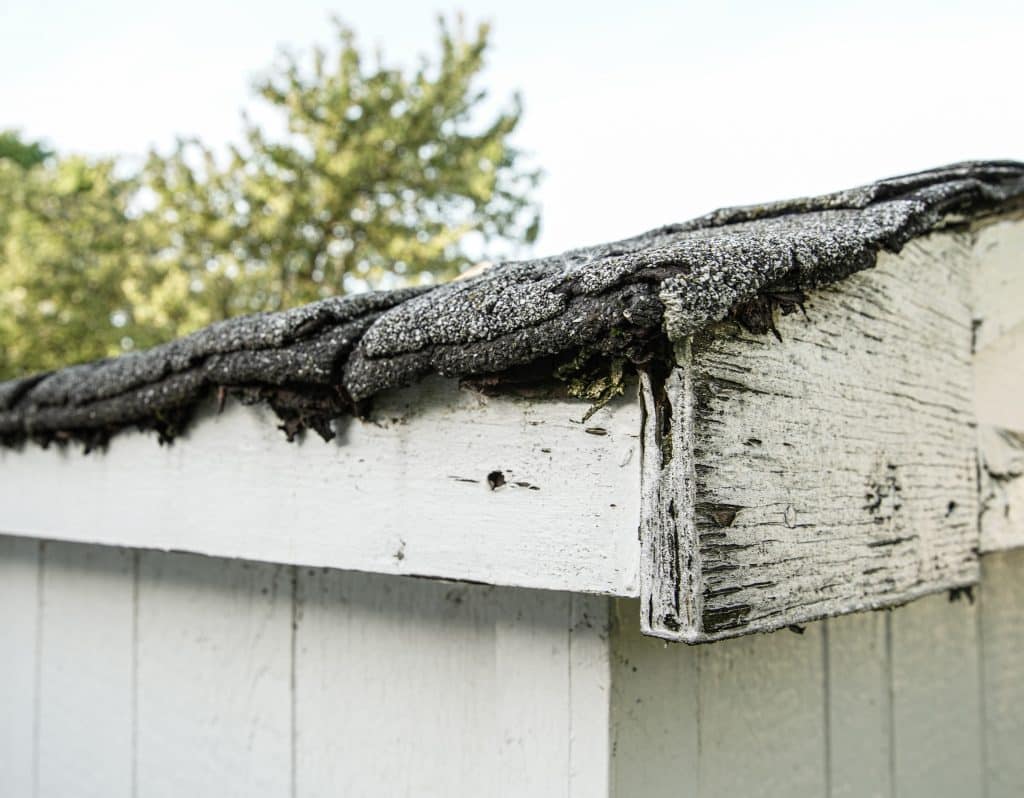
Look along the roof plane from the ground rather than at one shingle. Edges lifting, corners turning up and hairline cracks repeating across dozens of shingles tell you the mat underneath has lost its flexibility.
When a handful of shingles on one slope look like that, a repair is reasonable. When the pattern runs the length of a slope, you’re maintaining something that is already finished.
Leaks showing up in more than one place
One stain over a bathroom usually traces back to a vent pipe. Stains in two or three rooms, or a stain that returns after the flashing was already redone, suggest the water is getting past the covering in more than one path.
At that point the underlayment matters more than the shingles. LSU AgCenter calls underlayment the primary rain shed for your roof, with the shingles protecting it from wind, debris and sun.
Soft or sagging decking
Walk the attic with a flashlight on a bright day and look for pinholes of daylight at the sheathing joints. Dark staining, soft spots and any dip in the roof plane visible from the street are structural findings.
The LSU AgCenter guide expects deck material 7/16 of an inch to 5/8 of an inch thick, fastened with 8d common nails or the equivalent. Replacing rotted sections means pulling the covering off anyway, so patching over them rarely makes sense.
Shingles keep blowing off in ordinary weather
Louisiana’s basic wind speed ranges from 90 mph in the north of the state to 150 mph at the southeastern tip, so a roof here is expected to hold in serious wind. Losing tabs in a run-of-the-mill thunderstorm means the seal strips aren’t holding.
LSU AgCenter is blunt about the other common cause: improper nailing accounts for many of the wind-related roofing failures they see. Overdriven, underdriven or crooked nails give the shingle nothing solid to hang on.
Signs that usually mean a repair instead
- A single cracked vent boot or one length of lifted step flashing, with the field of the roof still sealed.
- Impact damage confined to one slope after a limb came down.
- A few missing tabs on a roof under ten years old that otherwise lies flat.
- Exposed nail heads on a ridge cap or a pipe collar.
- Debris sitting in a valley, which is a cleaning job before it becomes anything worse.
Our page on roof restoration versus roof repair walks through the middle ground between the two. There’s also a rundown of the warning signs worth calling about right away.
How age fits into the decision
Age alone doesn’t condemn a roof, but it changes what the other signs mean. A curled shingle on a six-year-old roof suggests a manufacturing or installation problem worth chasing. The same shingle at 22 years is the roof telling you it’s done.
| Roof material | Service life reported by HomeGuide | What that means for repair decisions |
|---|---|---|
| Asphalt shingles | 15 to 30 years | Past 20 years, repeat repairs rarely pay off |
| Metal roofing | 30 to 80 or more years | Panels often outlast the fasteners and sealants |
| Slate and tile | 100 to 200 or more years | Individual pieces are replaceable for decades |
HomeGuide also publishes a rough decision rule. Repair rather than replace when less than 25 percent of the roof is damaged, the repair costs under 30 percent of a new roof, and the roof is under 20 years old.
What a New Orleans roof is up against
Heat, wind and driving rain all work on the same materials here. LSU AgCenter’s storm guidance points homeowners toward wind-rated shingles and tear-resistant synthetic underlayment when the time comes to replace, because synthetic holds up better than felt if the covering above it is stripped.
Shingle wind ratings are set by test standards, not by marketing. Residential code accepts ASTM D3161 Class F or ASTM D7158 Class H for all wind speeds, and the National Roofing Contractors Association notes that under ASTM D7158-16, Class H corresponds to an ultimate design wind speed of up to 190 mph.
The FORTIFIED approach described by LSU AgCenter goes further than code by sealing the roof deck. Taping the sheathing seams under the underlayment cuts water entering the house by 95 percent if the shingles are stripped off, and ring shank deck nails roughly double uplift resistance.
What a proper inspection should cover
An estimate that arrives without anyone getting close to the roof isn’t worth much. The person looking should come back with photos and a specific list, not a verdict.
- Condition of the shingle seal strips on each slope, including the ones you can’t see from the street.
- Flashing at every penetration: chimney, sidewalls, vent pipes, skylights and the valleys.
- Drip edge at the eaves and rakes, since that metal anchors both the underlayment and the starter strip.
- Decking condition from inside the attic, with notes on any soft or stained sheathing.
- Attic ventilation and insulation, because trapped heat cooks a shingle roof from below.
- Photographs of anything the estimate says needs replacing.
LSU AgCenter points out that starter strip matters more than most homeowners realize. It’s a purpose-made shingle with adhesive placed to grab the drip edge, and cutting regular shingles in half to fake it leaves the first course poorly bonded.
A practical way to decide
- Walk the perimeter with binoculars and photograph every slope, including the ridge and the valleys.
- Check the gutters and splash blocks for granule accumulation after the next heavy rain.
- Go into the attic in daylight and look for pinholes, dark sheathing and damp insulation.
- Pull out the last two or three repair invoices and add them up against a replacement estimate.
- Get a written inspection. HomeGuide puts a professional roof inspection at $100 to $400.
- Check the contractor’s license before signing anything, since Louisiana requires a Residential Roofing or Residential Construction classification for residential roofing work valued at $7,500 or more.
Frequently asked questions
Does a 20 year old roof need to be replaced?
Not automatically, though 20 years is the age where the math usually turns. HomeGuide reports asphalt shingle service life at 15 to 30 years and suggests repair only when the roof is under 20 years old, less than a quarter of it is damaged, and the repair costs under 30 percent of a replacement. A 20 year old roof that still lies flat, seals and sheds water can keep going, so the condition decides it rather than the birthday.
What is the cheapest time of year to get a new roof?
Demand drives price more than the calendar does, and demand here spikes after storms. HomeGuide notes that rain, heavy wind or temperatures below 40 degrees Fahrenheit will delay installation, which is a bigger scheduling factor in Louisiana than cold weather is. Booking outside the peak weeks that follow a named storm usually gets you a better spot in the schedule.
How much does it roughly cost to replace a roof?
HomeGuide’s 2026 figures put a roof replacement at $5,700 to $16,000 on average, or $3 to $6 per square foot installed. Measured by the square, which is 100 square feet, that works out to $300 to $600 including materials and labor. Standard 3-tab asphalt sits at the lower end and architectural shingles at $4 to $6 per square foot installed.
Do I need a permit to replace my roof in New Orleans?
Yes, for most replacements. The city’s Department of Safety and Permits requires a residential re-roofing permit under Ordinance 30,235 MCS for any roof replacement affecting 50 percent or more on a single or two family home, with a $60 base fee and an extra $30 in historic districts. Work under 50 percent is exempt unless something else about the job triggers a permit.
Get a straight answer before the next storm
A roof at the end of its life doesn’t get better on its own, and the cost of finding out during a hurricane is a lot higher than the cost of finding out now. If you want a written assessment and a free estimate for roof replacement, we’ll come out and look.
Call (504) 732-0336 and we’ll tell you straight whether the roof needs a repair or a replacement.
Related reading
- How to Extend the Lifespan of Your Roof
- How to Identify and Fix Common Roof Leaks
- 4 Things Inspectors Check Before You Sell Your Home with an Older Roof
Sources
- HomeGuide, Roof Replacement Cost (2026)
- LSU AgCenter, Consumer’s Guide to Code-Compliant Roofing Installations
- LSU AgCenter, Roofing to Resist Wind and Rain Damage
- LSU AgCenter, Hurricane Preparedness Guidance
- LSU AgCenter, Building a Resilient Roof: The FORTIFIED Approach
- UpCodes, Classification of Asphalt Shingles
- Professional Roofing (NRCA), The wind resistance of shingles
- City of New Orleans, Residential Re-Roofing Permit
- Louisiana State Licensing Board for Contractors, Changes to Contractor Licensing Laws
Common questions about working with us
Yes we do, we offer 50 year non pro-rated warranty and 10 year workmanship warranty. We also offer 15 year unlimited wind warranty even from a named storm.
Turnkey roof repair is a comprehensive service where the entire roof repair process is managed from start to finish by a single provider. This includes assessment, planning, execution, and final inspection.
The TurnKey process includes a thorough roof inspection, detailed project planning, sourcing of materials, execution of repairs, and a final inspection to ensure quality and client satisfaction.
The duration varies based on the extent of damage and the size of the project. A professional assessment will provide a more accurate timeline.
Look out for signs such as leaks, missing or damaged shingles, sagging areas, or visible water damage in your ceiling. If you’re unsure, a professional assessment is recommended.
We work across New Orleans and 13 more communities: Metairie, Kenner, Harahan, River Ridge, St. Rose, Gretna, LaPlace, Covington, Mandeville, Madisonville, Slidell, Hammond and Baton Rouge. Call 504-732-0336 and we’ll confirm we cover your street.
Yes. Our 15-year unlimited wind warranty applies even when the damage comes from a named storm. It sits alongside our 50-year non-prorated warranty and 10-year workmanship warranty.
It depends on the size and pitch of the roof, the material you choose, and whether any decking or flashing needs replacing. After a free roof inspection, we give you a plan and a quote. For a breakdown by material and roof size, read our guide to roof replacement cost in New Orleans.