

Hail Damage on a Roof and What to Photograph for Your Own Records
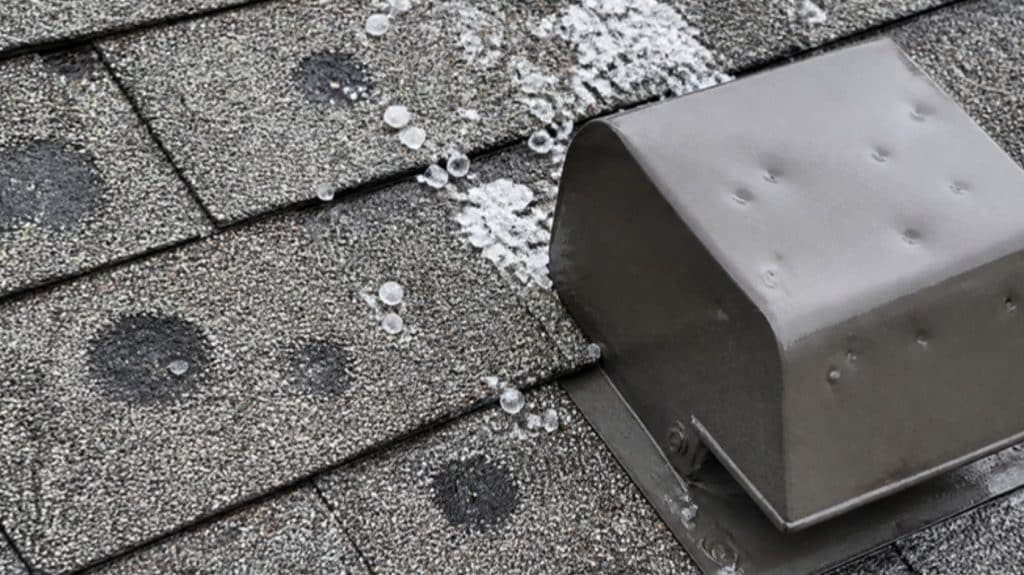
Hail damage on a roof is easy to miss and expensive to ignore. A stone that leaves no obvious hole can still fracture the mat inside a shingle, and the leak that follows shows up months later.
This walks through what hail does to a roof, how to tell a real strike from ordinary wear, and what to photograph so you have your own dated record. TurnKey Roofers inspects storm hit roofs across the New Orleans area, and you can reach us through the contact page or at (504) 732-0336.
Start with the safety rule. Wet shingles, loose granules and storm debris turn a roof into a slide, so everything below is written to be done from the ground or from inside the house.

Key takeaways
- NOAA classifies a thunderstorm as severe when it produces hail 1 inch or larger, which is quarter size.
- IBHS testing found that small dents let in little water while large dents produced substantial leakage, and tears at even the lowest severity level allowed large amounts of water through.
- Bruised shingles often look fine from the street, so photographs of gutters, soft metals and the ground tell you more than a squint at the roof.
- Granules collecting at downspouts after a storm are a real signal, since granules are the shingle’s sun protection.
- Date stamped photos of the storm, the debris and the visible marks give you a record that does not depend on anyone’s memory.
- Roof work is fall risk work, and federal rules require fall protection above six feet in construction for good reason.
What a hailstone does to a shingle
NOAA describes hail as precipitation in the form of balls or lumps built from concentric layers of ice. Those layers are the record of a stone being cycled through a storm and gaining mass before it finally falls.
When it lands, the damage runs in layers. The surface granules take the first hit and scatter, exposing the asphalt underneath to sunlight it was never meant to see.
Below that, the fiberglass mat can crack without the surface opening up. That is the bruise roofers talk about, and it’s the kind of damage that turns into a leak on a schedule of its own.
IBHS put numbers to the progression. Its testing found that small dents produced minimal water penetration, large dents produced substantial leakage, and on a tear severity scale from 0 to 3, tears approaching level 1 already allowed large amounts of water through.
Hail size and what it means for your roof
Storm reports use everyday objects rather than measurements, and the conversions matter when you’re writing down what fell.
| Reported as | Diameter | What it suggests for a roof |
|---|---|---|
| Pea | 0.25 inch | Rarely a roof concern on its own |
| Penny | 0.75 inch | Below the severe threshold, worth noting |
| Quarter | 1.00 inch | The severe criterion, inspection worth doing |
| Ping pong ball | 1.25 inch | Granule loss and soft metal dents likely |
| Half dollar | 1.50 inch | Bruising becomes common on older shingles |
| Golf ball | 1.75 inch | Mat fracture likely across exposed slopes |
| Hen egg | 2.00 inch | Visible damage across the roof, call promptly |
| Baseball | 2.75 inch | Punctures and structural damage possible |
Direction matters as much as diameter. Hail driven by a strong crosswind hits one or two elevations hard and leaves the others almost untouched, which is why a roof can look fine from the street and be beaten up out back.
Age matters too. An older shingle has already lost granules to sun and rain, and the asphalt beneath has stiffened, so it fractures at a smaller impact than a new one would.
The severe threshold sits at that 1 inch mark. Stones smaller than a quarter can still strip granules when they come in hard and at an angle, so size alone doesn’t settle the question.
What hail damage looks like from the ground
- Granules piling at the downspout outlet. A handful of loose granules is normal on a new roof. A visible drift of them after a storm is not.
- Dents in soft metal. Gutters, downspouts, roof vents, flashing and the top of the air conditioner take dings that are easy to see and easy to photograph.
- Splatter marks. Clean circles on a dirty surface show where stones landed, and they fade within weeks, so they’re worth capturing early.
- Bruised spots on visible slopes. Dark, round marks where granules are missing often catch the light differently from the rest of the roof.
- Damage to other surfaces. Dented mailboxes, shredded plant leaves, cracked fence caps and marked deck boards all confirm that stones reached your property.
- Bent or dislodged ridge vents. Ridge and hip pieces sit high and take a disproportionate share of the impacts.
Two of those together is a strong signal. Granules in the gutter plus dents in soft metal usually means the field of the roof took the same beating.
What to photograph for your own records
- The hail itself while it’s on the ground. Put a coin, a ruler or your hand beside a stone for scale and take the shot before it melts.
- A wide view of the house from each side. Four photos that show the whole property give you context for everything else.
- Every dented metal surface, close up. Gutters, downspouts, vents, flashing and the condenser top, with the dents lit from an angle so they read in the photo.
- The gutter outlets and the ground below them. Granule accumulation is your best proxy for what happened to the shingle surface.
- Splatter marks on painted or dusty surfaces. Deck rails, siding, window sills and the driveway.
- Any interior stain, with the date. Ceilings, wall tops and the attic sheathing if you can see it from the hatch.
- A note of the date, time and what the forecast said. Written down the same day, it beats trying to reconstruct it later.
Keep everything in one folder with the original files rather than screenshots, since the camera’s timestamp travels with the original. That’s your record, and it costs you nothing but ten minutes.
Where to look inside the house
Interior signs lag behind the storm, sometimes by months, so it’s worth a second pass a few weeks later.
Check ceiling corners and the tops of exterior walls for faint rings or discoloration. Look at the attic side of the sheathing with a flashlight from the hatch, watching for dark streaks running down from nail heads.
A musty smell in a closet on an exterior wall is worth investigating too. Water tracks along framing and shows up away from where it entered.
Our post on how weather affects your roof covers the longer arc of that, from a single storm through years of sun and humidity.
When to stay off the roof, which is most of the time
Climbing up to check for hail marks is the single most dangerous thing a homeowner does after a storm. Granules act like ball bearings underfoot, and a wet slope makes it worse.
Federal construction rules require fall protection for work at six feet or more above a lower level, and roofing crews use anchors, harnesses and roof jacks because the exposure is real. A ladder and sneakers are not a substitute.
There’s a second reason to stay down. Walking a hail struck roof fractures mats that were only bruised, so the inspection itself can create damage.
IBHS reaches the same conclusion from the research side. Its lab fires laboratory manufactured hailstones from a pressurized cannon at roofing materials, matched to stones collected in real storms, precisely because judging damage by eye on a roof is unreliable.
Leave it to someone who does it daily. A roofer will document the field, the ridges, the penetrations and the metal, and the photos come back to you.
What happens after the inspection
Damage ranges from cosmetic to structural, and the repair scales with it. A handful of bruised shingles on one slope is a different job from a roof with mat fractures across every plane.
- Spot repair. Individual shingles replaced where strikes are isolated and the rest of the field is sound.
- Slope replacement. One elevation redone where the storm came in from a single direction, which is common.
- Full replacement. Used where fractures are spread across the roof or the covering was already near the end of its life.
- Component work. Vents, flashing and gutters replaced separately when the shingles came through intact.
Our hail damage roof repair page covers how residential work is scoped, and the commercial hail damage repair page covers low slope membrane roofs, where the failure mode looks different.
Frequently asked questions
How much damage does hail do to a roof?
It depends on stone size, wind speed and the age of the covering. IBHS testing showed a direct relationship between damage severity and water leakage, with small dents letting in very little and large dents producing substantial infiltration. Tears were worse still, allowing large amounts of water through even at the low end of the severity scale.
How can I tell if my roof was damaged by hail?
Look for granules collecting at the downspouts, dents in gutters and soft metals, splatter marks on dusty surfaces and round bruised spots on the visible slopes. Damage on other property, such as a dented mailbox or shredded plants, confirms stones reached you. A roofer can verify the field of the roof without you climbing it.
Does hail damage always cause a leak right away?
No, and that’s what makes it deceptive. A fractured mat can hold water out for a season or more before the crack opens enough to let it through. That gap between the storm and the symptom is the reason to document everything the same week.
What size hail damages a roof?
NOAA treats 1 inch, quarter size, as the threshold that makes a thunderstorm severe, and that is a sensible point to have a roof looked at. Smaller stones driven by strong wind can still strip granules, especially on an older roof. Larger stones from golf ball size upward commonly bruise the mat underneath.
Should I get on the roof to check after a storm?
No. Loose granules and wet shingles make a hail struck roof unusually slippery, and walking it can turn a bruise into a fracture. Federal construction rules require fall protection at six feet and above, which tells you how the trade views the risk.
Get a hail inspection before the next storm stacks on top of it
Documentation is yours to keep and the inspection is ours to do. Between the two, you’ll know what the storm actually did instead of guessing at it.
TurnKey Roofers will look at the roof, photograph what we find, and give you a free estimate on anything that needs work. Call (504) 732-0336 or send your details through the site.
Related reading
- Warning signs your home needs a roofing contractor immediately
- How to prepare your roof for hurricane season
- How to identify and fix common roof leaks
Sources
Common questions about working with us
Yes we do, we offer 50 year non pro-rated warranty and 10 year workmanship warranty. We also offer 15 year unlimited wind warranty even from a named storm.
Turnkey roof repair is a comprehensive service where the entire roof repair process is managed from start to finish by a single provider. This includes assessment, planning, execution, and final inspection.
The TurnKey process includes a thorough roof inspection, detailed project planning, sourcing of materials, execution of repairs, and a final inspection to ensure quality and client satisfaction.
The duration varies based on the extent of damage and the size of the project. A professional assessment will provide a more accurate timeline.
Look out for signs such as leaks, missing or damaged shingles, sagging areas, or visible water damage in your ceiling. If you’re unsure, a professional assessment is recommended.
We work across New Orleans and 13 more communities: Metairie, Kenner, Harahan, River Ridge, St. Rose, Gretna, LaPlace, Covington, Mandeville, Madisonville, Slidell, Hammond and Baton Rouge. Call 504-732-0336 and we’ll confirm we cover your street.
Yes. Our 15-year unlimited wind warranty applies even when the damage comes from a named storm. It sits alongside our 50-year non-prorated warranty and 10-year workmanship warranty.
It depends on the size and pitch of the roof, the material you choose, and whether any decking or flashing needs replacing. After a free roof inspection, we give you a plan and a quote. For a breakdown by material and roof size, read our guide to roof replacement cost in New Orleans.