

What to Check on a Roof After a Storm Moves Through
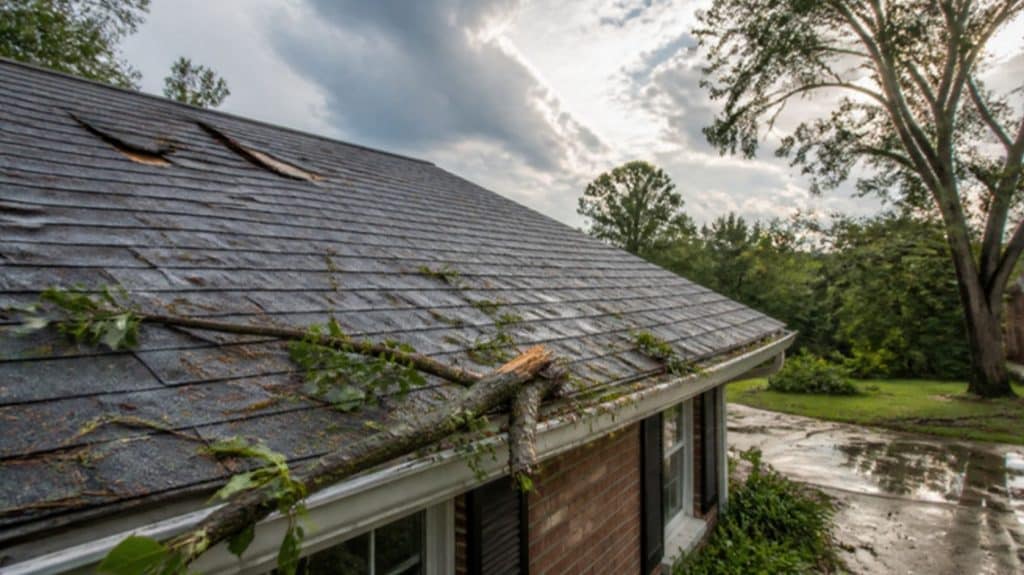
The morning after a storm, the temptation is to grab a ladder and go look. That’s the single most dangerous thing you can do, and most of what you need to know can be seen without leaving the ground.
This is the walk-around TurnKey Roofers does across the New Orleans area after a system moves through, in the order we do it. It takes about twenty minutes on an average house.
If you find something that worries you, use the contact page or call (504) 732-0336 and we’ll come look properly.
Key takeaways
- Stay off a storm-damaged roof. OSHA’s guidance is that nobody works on a damaged roof until its strength and structural integrity has been determined.
- Treat every downed line as live, and keep metal ladders away from them.
- Most useful findings show up from the ground, in the attic and in the gutters.
- Photograph everything with the date, since New Orleans already uses geotagged photos as its own record of roof work.
- Hail marks that look alarming may be cosmetic, and cracks that matter often show on the back of the shingle where you can’t see them.
- Even a Category 1 hurricane is expected to damage roof coverings on well-built frame homes.
Before anything else, stay off the roof
OSHA’s roof tarping guidance is written for professionals and it still says to assess the roof’s condition and stability before anyone starts work. Employees aren’t allowed on a damaged roof until its strength and structural integrity has been determined.
The electrical hazard is the one that kills people. OSHA says to look for downed overhead power lines, treat all power lines as live, and never use a metal ladder near them or near energized equipment.
Generators add a second path to the same hazard. OSHA warns that generator use can cause backfeed, energizing lines that are no longer receiving power from the grid.
Fall protection is required for work six feet or more above a lower level, which describes almost every residential roof. If you don’t have that equipment and the training to use it, the roof isn’t yours to walk.
What to check from the ground
- Missing shingles or tabs, especially along the ridge, the rakes and the eaves where wind pressure concentrates.
- Shingles that are lifted, creased or sitting out of line with the course around them.
- Bare patches where the mineral surface has been stripped, which show as a lighter or darker rectangle from the street.
- Bent or displaced drip edge, ridge cap or gable trim.
- Vent pipes, turbines and satellite mounts knocked out of plumb.
- Granule buildup in the gutters, at the downspout outlets and on the splash blocks.
- Gutters pulled loose, dented or full of shingle pieces.
- Limbs, fence panels or roofing material from elsewhere lying in the yard or on the roof.
Use binoculars or the zoom on your phone from the far side of the yard. A photograph taken from a neighbour’s driveway often shows a slope you can’t see from your own.
What to check inside
- Ceiling stains, particularly in corners and along the line where the ceiling meets an exterior wall.
- Damp or matted insulation in the attic, which shows where water landed before it reached the ceiling below.
- Daylight visible through the sheathing joints, which means the covering above has opened up.
- Wet sheathing or drips at nail points, which tell you the underlayment has been breached.
- Water tracking down a chimney chase or along a vent pipe, which points to flashing rather than the field of the roof.
- Any new sag in a ceiling plane, which is a stop-everything finding.
Do the attic check in daylight with the lights off. Pinholes of light are far easier to see that way, and they’re the fastest way to find where the covering opened.
What counts as storm damage
Wind damage is mechanical. It lifts a tab, breaks the self-seal bond and folds the shingle back, and a shingle that has been creased will not re-seal properly even if it flips back down.
Hail damage is impact damage, and it’s harder to read. IBHS found in its UL 2218 testing that crushed granules appeared on every panel tested but noted that this damage mode isn’t seen in the field, because hailstones dislodge granules rather than crush them.
The cracks that matter are often invisible from above. IBHS records any tearing, fracturing, cracking or rupturing on the back of the shingle as a failure, while dents, dislodged granules and openings visible only on the top surface are not counted.
Water damage is the consequence of the first two. Once the covering is open, the underlayment becomes the only barrier, and LSU AgCenter describes underlayment as the primary rain shed for the roof.
| Hurricane category | Sustained wind | What the National Hurricane Center expects on well-built frame homes |
|---|---|---|
| Category 1 | 74 to 95 mph | Damage to roof, shingles, vinyl siding and gutters |
| Category 2 | 96 to 110 mph | Major roof and siding damage |
| Category 3 | 111 to 129 mph | Major damage or removal of roof decking and gable ends |
| Category 4 | 130 to 156 mph | Loss of most of the roof structure, possibly some exterior walls |
| Category 5 | 157 mph and above | Total roof failure and wall collapse on a high percentage of homes |
Photographs worth taking for your own records
- One wide shot of each elevation of the house, front, left, right and rear, before anyone touches anything.
- A close shot of every specific problem, with something in frame for scale.
- The gutters and splash blocks, showing granule accumulation.
- Every interior stain, with a second photo showing which room it’s in.
- The attic, including damp insulation and any daylight showing through.
- Debris on the ground, including anything that came off the roof.
Turn on the date and location stamp. The city already works this way: New Orleans requires geotagged photos of the exterior and of four installation stages for a residential re-roofing permit, so that habit fits the local process.
When to call right away
Some findings can wait for a scheduled appointment. These can’t.
- Active water coming into the house during or after the rain.
- Any sag, bulge or new dip in a ceiling or in the roof plane.
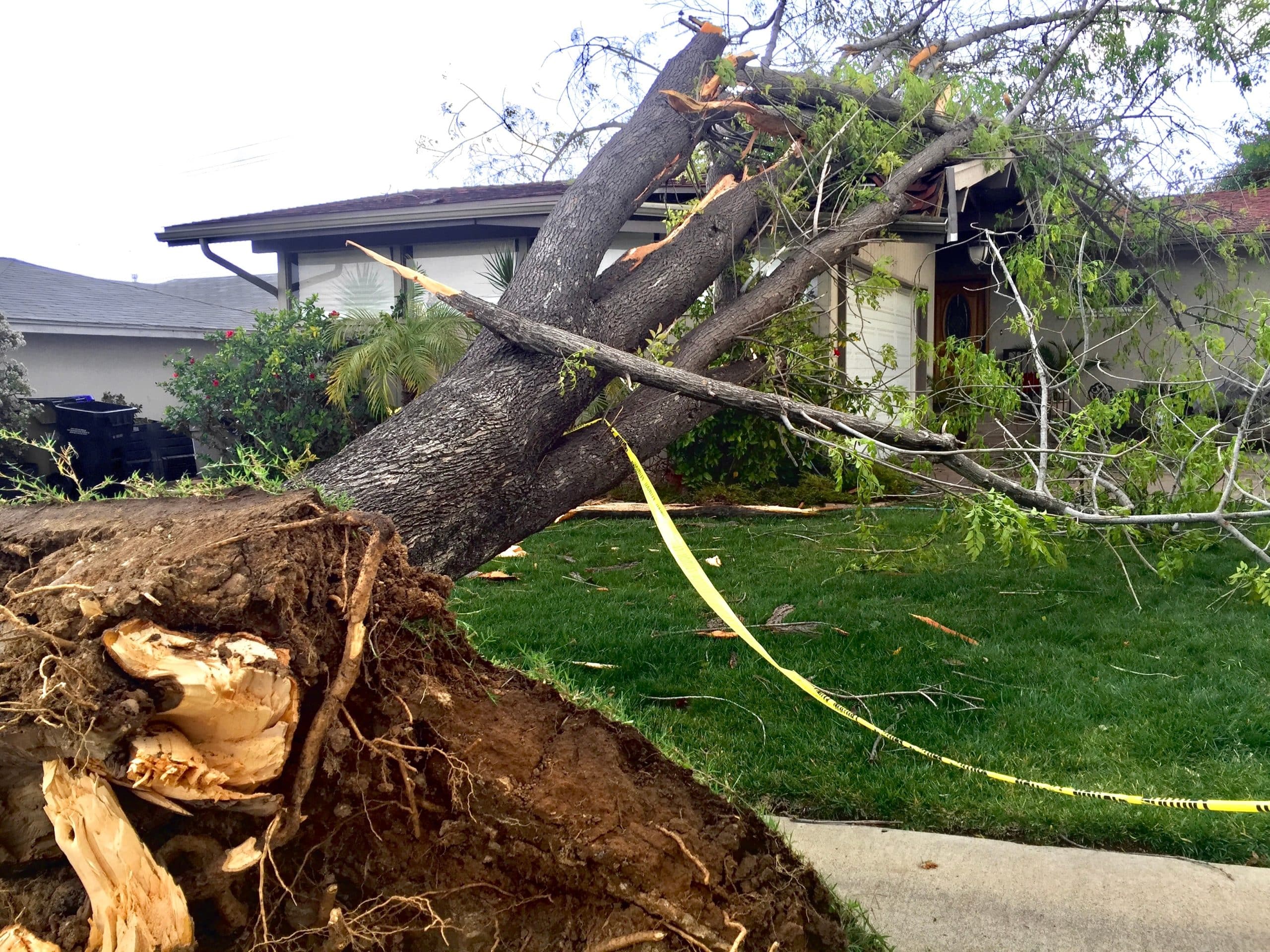
- A tree or large limb resting on the roof.
- Decking visible from the ground where the covering is gone.
- Anything involving a power line touching or near the house.
Our emergency roofing page explains how we handle the first response. Getting a temporary covering on quickly limits what the next rain does to the inside of the house.
What to do in the first 48 hours
Move what you can protect. Furniture, electronics and anything paper should be shifted out from under an active leak, and a bucket with a towel in it makes far less noise than a bare one.
Clear the ground-level drainage. LSU AgCenter emphasizes keeping drainage systems free of debris to help prevent flooding, and after a storm that means the gutters, the downspout outlets and the yard drains.
Deal with trees carefully. LSU AgCenter recommends inspecting trees and shrubs for damage after a storm and contacting a licensed arborist rather than taking on a damaged limb yourself.
Then get the roof looked at by someone who can safely get onto it. Our post on how weather affects your roof covers the longer-term picture.
Where damage shows up first on a New Orleans roof
Wind doesn’t load a roof evenly. The Building America Solution Center explains that uplift travels from the covering into the sheathing and then into the rafters, and the pressure is highest at the edges.
That’s why LSU AgCenter recommends extra deck nails four inches apart at the roof corners, ridges and eaves, where wind forces concentrate. Those same three places are where your eyes should go first after a blow.
Low-slope sections deserve a second look as well. LSU AgCenter describes a very low-pitched roof as acting like an airplane wing in high winds, which is worth remembering on porch and gallery roofs, carports and flat rear additions.
Valleys are the fourth spot. Debris packs into them, water backs up behind it, and LSU AgCenter notes those areas are prone to leaking under heavy rain.
What not to do while you wait
- Don’t climb up to look, and don’t send someone else up without fall protection and training.
- Don’t walk a tarped section. OSHA warns that a tarped roof will be very slippery, especially when wet, and that tarped-over skylights won’t be obvious underfoot.
- Don’t pressure wash a damaged roof to see it better. You’ll drive water under the covering.
- Don’t clear roof debris by hand from a ladder if a roof rake from ground level will do it, which is what OSHA suggests.
- Don’t throw out the damaged material until it’s been photographed and looked at.
Frequently asked questions
What to do if you have roof damage from a storm?
Start from the ground and document everything before anything gets moved or cleaned up. Check the slopes with binoculars, check the attic in daylight for pinholes and damp insulation, photograph each elevation and each specific problem with the date and location stamped on the image. Then call a licensed roofer to get on the roof, because OSHA’s own guidance says nobody should work on a damaged roof until its strength and structural integrity has been determined.
What is considered storm damage to a roof?
Broadly, three things: wind damage that lifts, creases or removes shingles and breaks the self-seal bond, impact damage from hail or flying debris, and the water damage that follows once the covering is open. The National Hurricane Center expects damage to roof coverings on well-built frame homes at Category 1 winds of 74 to 95 mph, and removal of roof decking at Category 3. Not every mark is damage: IBHS notes that crushed granules showed up on every shingle panel in its lab testing but that this damage mode isn’t seen in the field.
How soon should a damaged roof be looked at?
Within days rather than weeks, and immediately if water is coming in or anything is sagging. Once the covering is open the underlayment is the only barrier left, and LSU AgCenter describes it as the primary rain shed for the roof rather than a permanent surface. Along the Gulf Coast the next rain is rarely far off.
Can I check the roof myself after a storm
You can check it, but not from on top of it. Everything in the ground-level and attic lists above can be done safely, and a phone camera at full zoom from across the street is a better tool than a ladder. Fall protection is required for work six feet or more above a lower level, and a storm-damaged roof may not hold weight where it looks solid.
Get eyes on it before the next system
A roof that lost a few tabs is a straightforward fix if it’s caught early. The same roof left through another few weeks of rain turns into decking work.
Call (504) 732-0336 for a free post-storm inspection and a written estimate of what actually needs doing.
Related reading
- How to Prepare Your Roof for Hurricane Season
- Warning Signs Your Home Needs a Roofing Contractor Immediately
Sources
- OSHA, Roof Tarping (Blue Roof) Safety fact sheet
- OSHA 1926.501, Duty to have fall protection
- NOAA National Hurricane Center, Saffir-Simpson Hurricane Wind Scale
- IBHS, Relative Impact Resistance of Asphalt Shingles
- LSU AgCenter, Roofing to Resist Wind and Rain Damage
- LSU AgCenter, Hurricane Preparedness Guidance
- City of New Orleans, Residential Re-Roofing Permit
- Building America Solution Center, Bracing of Roofs for Hurricane, High Wind, and Seismic Resistance
- LSU AgCenter, LaHouse Special Hurricane Resistance Features
Common questions about working with us
Yes we do, we offer 50 year non pro-rated warranty and 10 year workmanship warranty. We also offer 15 year unlimited wind warranty even from a named storm.
Turnkey roof repair is a comprehensive service where the entire roof repair process is managed from start to finish by a single provider. This includes assessment, planning, execution, and final inspection.
The TurnKey process includes a thorough roof inspection, detailed project planning, sourcing of materials, execution of repairs, and a final inspection to ensure quality and client satisfaction.
The duration varies based on the extent of damage and the size of the project. A professional assessment will provide a more accurate timeline.
Look out for signs such as leaks, missing or damaged shingles, sagging areas, or visible water damage in your ceiling. If you’re unsure, a professional assessment is recommended.
We work across New Orleans and 13 more communities: Metairie, Kenner, Harahan, River Ridge, St. Rose, Gretna, LaPlace, Covington, Mandeville, Madisonville, Slidell, Hammond and Baton Rouge. Call 504-732-0336 and we’ll confirm we cover your street.
Yes. Our 15-year unlimited wind warranty applies even when the damage comes from a named storm. It sits alongside our 50-year non-prorated warranty and 10-year workmanship warranty.
It depends on the size and pitch of the roof, the material you choose, and whether any decking or flashing needs replacing. After a free roof inspection, we give you a plan and a quote. For a breakdown by material and roof size, read our guide to roof replacement cost in New Orleans.