
Slate Roof Repair on Older New Orleans Houses
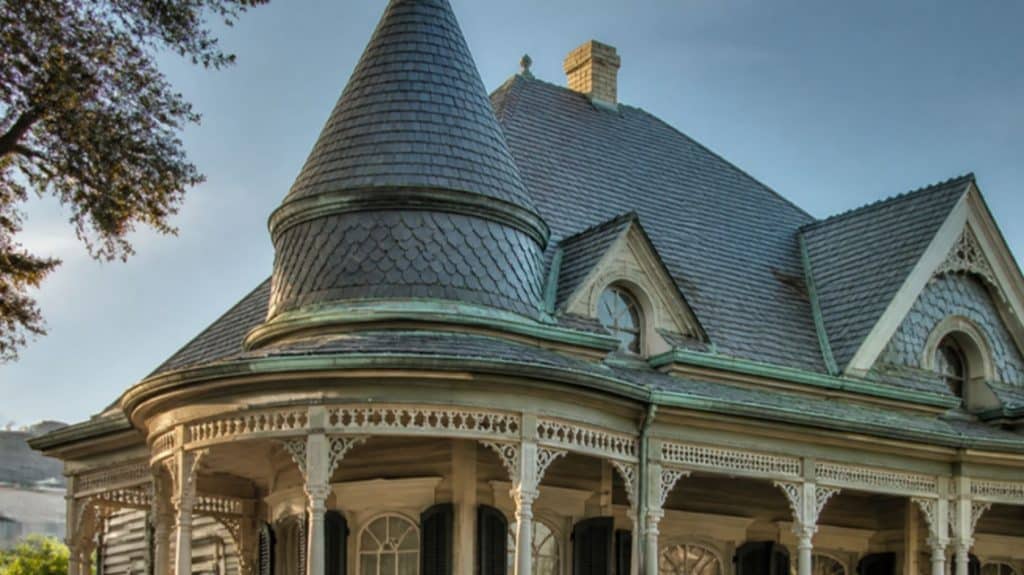
A slate roof outlives most of the things holding it up. The National Park Service puts a properly installed slate roof at 60 to 125 years or longer, with some running past 200, while the copper and steel around it wears out decades sooner.
That’s the whole shape of slate repair. Most of the time the stone is fine and something else has failed, so the job is identifying which. Our slate roofing page covers the work, and the TurnKey Roofers homepage has the rest of what we do.
For an assessment on an older New Orleans house, call (504) 732-0336 or use the contact page.

Key takeaways
- Slate lasts 60 to 125 years or longer, so metal flashings and fasteners usually fail first.
- Slates sliding out of position often mean corroding steel nails, not failing stone.
- Tap a slate: a clear solid sound means it’s sound, a dull thud means it’s weathered through.
- Under about 20 percent damaged or missing slates on a roof in generally good condition, repair beats replacement.
- The correct repair uses a ripper, a matched slate and a copper bib over the new nail head. Roof cement is not a repair.
- Louisiana’s code bars roofing over an existing slate roof, and bars reinstalling cracked or broken slate.
What actually fails on a slate roof
The Park Service brief on historic slate roofs is blunt about where to look, and the order is worth learning before you call anyone.
- Flashings. Because slate is so durable, metal flashings often wear out before the slate does, and the brief notes even the smallest pinhole can let large quantities of water in.
- Fasteners. Where slates are sliding out of position while the stone still looks good, ferrous nails are corroding. Those slates can be salvaged and relaid.
- Gutters and valleys. The brief lists these, along with flashings, as more likely leak sources than the slates themselves.
- The slate itself. Natural weathering shows as chipping and scaling along the cleavage planes, with paper thin laminations flaking off until the stone goes soft and spongy.
- Impact damage. Falling limbs, debris and the weight of someone walking on the roof all break individual slates.
- Bad nailing. A nail driven too far in the course below punctures the slate above it, which is a defect from installation day showing up 40 years later.
Reading a slate’s condition
The old test still works. Hold a slate on your fingertips and strike it: high grade slate rings with a clear, solid sound, and a severely weathered slate gives a dull thud.
Weathering happens because of mineral impurities in the stone, mainly calcite and iron sulfides, which react with wet and dry and hot and cold cycles to form gypsum. White blotches on the surface are that gypsum leaching out, and it’s a sign the slate is on its way.
Delamination is often worse on the underside than the face, which is why a roof that looks acceptable from the street can be failing. Very old delaminating slates also hold moisture and rot the wood next to them even where nothing is visibly leaking.
How a slate is actually replaced
There’s one correct method, and it’s been the same for a century. The Park Service describes it step by step.
- Cut or pull the old slate’s nails with a ripper slid up under the course. If the roof was laid with steel cut nails rather than copper, neighboring slates often get disturbed in the process and need repairing too.
- If the slate won’t slide out, punch the pointed end of the slate hammer into it and drag it out.
- Select a new or salvaged slate matching the size, shape, texture and weathered color of the old one.
- Slide it into place and secure it with one nail through the vertical joint between the slates in the course above, roughly one inch below the tail of the slate two courses up.
- Cover that new nail hole with a copper bib, cut and bent into a slight concave shape so it grips by friction, then pushed home over the nail head with the slate hammer.
Where holes have to be punched in a replacement slate, they’re punched from the back. That leaves a shallow countersink on the face for the nail head to sit in, which is the difference between a slate that lasts and one that cracks at the fastener.
What not to do to a slate roof
Most of the damage we’re called out to fix was done by a previous repair.
- Don’t walk it. The Park Service is direct: slate roofs should not be walked on if at all possible. If someone must, ladders get hooked over the ridge and the worker walks on the ladder to spread the load, in soft soled shoes, stepping on the lower middle of the exposed portion.
- Don’t face nail replacements. A nail through the face of a slate is a hole in the roof with a nail in it.
- Don’t smear cement over cracks. It hides the problem, traps water and makes the eventual proper repair harder.
- Don’t substitute a mismatched slate. Size, shape, texture and weathered color all have to match, or the repair reads from the street and sheds water differently.
- Don’t switch to artificial slate on a historic roof. The brief notes its rigid, man made appearance, its tendency to fade, and that the total cost is only marginally less because labor, flashings and tear off are identical either way.
Repair or replace
The Park Service gives a decision guideline, and it’s more useful than any rule of thumb a contractor will offer.
- Weigh the roof’s age and condition against the expected life of that type of slate.
- Count the damaged and missing slates. Under about 20 percent, on a roof otherwise in good condition, points to repair.
- Find the actual leak source. Gutters, valleys and flashings are more likely than the slates, and attic condensation produces false leaks.
- Check rafters and sheathing for stains, and poke an awl into suspect wood to find rot.
- If many slates are sliding, suspect corroding fasteners and plan to salvage and relay rather than replace.
- Examine the flashings closely, since they commonly wear out first.
- Check whether deterioration is uniform. Often only one slope needs replacing, which spreads the cost over years.
- Confirm matching slate is available before committing to anything.
That last point bites. Even where replacement is the right answer, the existing roof often has to be repaired anyway to buy time while appropriate slate is documented and ordered.
What the code requires
Louisiana follows the 2021 International Residential Code, and Chapter 9 has specific provisions for slate.
- Slate shingles are only permitted on slopes of 4:12 or greater, and must be fastened to solidly sheathed roofs.
- Slate must comply with ASTM C406, and each slate takes two fasteners.
- Minimum headlap follows Table R905.6.5. The Park Service records the traditional standard as 3 inches, reduced to 2 inches on mansards and very steep slopes, and increased to 4 inches or more on low pitches of 8:12 or less.
- A roof recover is not permitted where the existing covering is slate, so a slate roof can’t be shingled over.
- Existing slate may be reinstalled, but damaged, cracked or broken slate must not go back on the roof.
What slate repair costs
Slate repair carries a premium for the material and for the hands that know it. HomeGuide’s 2026 figures put a minor slate repair at $500 to $750 and sectional work at $1,000 to $3,000 per square, which is 100 square feet.
By area that works out to $10 to $30 or more per square foot to replace damaged or missing slates, depending on the slate type, damage level and ease of access. For comparison, HomeGuide puts a full natural slate roof at $22,000 to $70,000, with soft slate lasting 50 to 125 years and hard slate 75 to 200.
Set against those replacement numbers, spending real money on flashing repairs and matched slate replacements is usually the cheaper path by a wide margin. Our residential roof repair page covers how we scope that work.
Historic districts and the permit
Plenty of New Orleans slate roofs sit inside a regulated district. The city’s residential re-roofing permit costs $60 normally and $90 inside a Historic District Landmarks Commission or Vieux Carre Commission area, and processing takes longer there.
That permit applies where 50 percent or more of the roof is being replaced, so individual slate repairs generally fall below the threshold. A whole slope is a different conversation, and our guide to roofing solutions for historic New Orleans homes covers the wider picture.
Frequently asked questions
Can a slate roof be repaired?
Yes, and the Park Service’s position is that slate roofs should be repaired rather than replaced whenever possible. Broken, cracked and missing slates are replaced individually with a ripper, a matched slate and a copper bib. Where slates are sliding because ferrous nails corroded, the slates themselves are often still good and get salvaged and relaid.
How expensive is it to repair a slate roof?
HomeGuide’s 2026 figures put minor slate repair at $500 to $750 and larger sectional work at $1,000 to $3,000 per 100 square feet, or $10 to $30 and up per square foot. The cost reflects the material, the difficulty of access and the specialist labor. It remains far cheaper than the $22,000 to $70,000 a full slate roof costs.
What is the life expectancy of a slate roof?
The Park Service puts a properly installed slate roof at 60 to 125 years or longer depending on the slate type, roof configuration and location, with some lasting over 200 years. HomeGuide splits it by hardness, giving soft slate 50 to 125 years and hard slate 75 to 200. The flashings almost never last that long, which is why they drive the maintenance schedule.
Can you walk on a slate roof?
Avoid it. The weight of a person walking on slate is listed by the Park Service as a cause of broken slates, and the brief recommends keeping foot traffic off the roof entirely.
Where access is unavoidable, ladders are hooked over the ridge and walked on to distribute the load, with soft soled shoes and steps placed on the lower middle of each exposed slate. Routine surveys are done from the ground with binoculars or from a lift.
Get the slate roof looked at properly
A slate roof rewards being left alone by someone who knows what they’re doing. The damage comes from good intentions with the wrong materials.
We’ll survey it, tell you plainly if the problem is flashing, fasteners or stone, and quote the work in writing. Call (504) 732-0336 or use the contact page.
Related reading
- Roofing Solutions for Historic Homes in New Orleans
- How to Extend the Lifespan of Your Roof
- How to Choose Roofing That Enhances Your Home’s Curb Appeal
Sources
Common questions about working with us
Yes we do, we offer 50 year non pro-rated warranty and 10 year workmanship warranty. We also offer 15 year unlimited wind warranty even from a named storm.
Turnkey roof repair is a comprehensive service where the entire roof repair process is managed from start to finish by a single provider. This includes assessment, planning, execution, and final inspection.
The TurnKey process includes a thorough roof inspection, detailed project planning, sourcing of materials, execution of repairs, and a final inspection to ensure quality and client satisfaction.
The duration varies based on the extent of damage and the size of the project. A professional assessment will provide a more accurate timeline.
Look out for signs such as leaks, missing or damaged shingles, sagging areas, or visible water damage in your ceiling. If you’re unsure, a professional assessment is recommended.
We work across New Orleans and 13 more communities: Metairie, Kenner, Harahan, River Ridge, St. Rose, Gretna, LaPlace, Covington, Mandeville, Madisonville, Slidell, Hammond and Baton Rouge. Call 504-732-0336 and we’ll confirm we cover your street.
Yes. Our 15-year unlimited wind warranty applies even when the damage comes from a named storm. It sits alongside our 50-year non-prorated warranty and 10-year workmanship warranty.
It depends on the size and pitch of the roof, the material you choose, and whether any decking or flashing needs replacing. After a free roof inspection, we give you a plan and a quote. For a breakdown by material and roof size, read our guide to roof replacement cost in New Orleans.


