

Tarping a Roof Safely Until a Permanent Repair Is Made
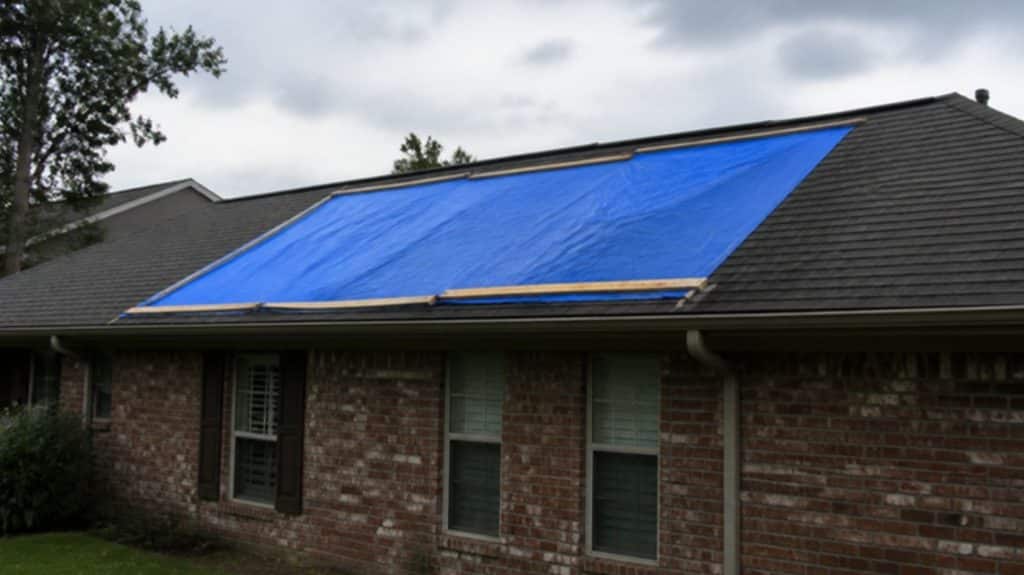
A tarp buys time. It keeps the next rain out of the ceiling while you wait for materials, a schedule slot or the weather to settle down.
It’s also roof work, done on a surface that a storm has already damaged, and that combination hurts a lot of people every hurricane season. TurnKey Roofers tarps roofs across the New Orleans area, and this is how the job is supposed to be approached.
If the answer after reading this is that you’d rather someone else did it, use the contact page or call (504) 732-0336.

Key takeaways
- OSHA describes reinforced plastic tarps, commonly called blue roofs, as temporary protection for storm-damaged buildings.
- Nobody should be on a damaged roof until its strength and structural integrity has been determined.
- Treat every power line as live, keep metal ladders away from them, and remember a generator can backfeed a line that looks dead.
- Never install a tarp during a storm, in wind or in rain.
- A tarped roof is very slippery, so don’t walk on the tarp once it’s down.
- Fall protection is required for work six feet or more above a lower level, and OSHA says not to stand on a roof steeper than 4 in 12 without a conventional fall protection system.
When a tarp is the right call
A tarp makes sense when the covering has opened up, the structure underneath is sound, and a permanent repair can’t happen yet. It’s the same logic behind government temporary roofing programs, which use reinforced sheeting to keep a house habitable until real repairs can be made.
It’s the wrong call when the damage is structural. If a ceiling is sagging, a limb is resting on the roof or the decking has come away, a sheet of plastic won’t hold anything and getting up there to fit it is dangerous.
It’s also unnecessary when the opening is small and a proper repair can be done within a day or two. Our roof repair page covers what a same-week fix usually involves.
Leave it to a professional if any of this is true
- There’s a downed or sagging power line anywhere near the house.
- The roof is steeper than 4 in 12 and you don’t have a fall arrest system and the training to use it.
- Any part of the roof feels soft, springy or visibly deflected.
- It’s windy, raining or getting dark.
- You’d be working alone.
- The area needing cover is large, awkward or crosses a ridge with obstructions on both sides.
None of that is squeamishness. Roof work is fall-risk work, and a storm-damaged roof has hazards a sound one doesn’t.
Clear the hazards before anyone touches a ladder
Electricity comes first. OSHA’s tarping guidance says to look for downed overhead power lines, treat all power lines as live, contact the utility company to confirm lines are de-energized, and never use a metal ladder near power lines or in close proximity to energized electrical equipment.
Generators create the hazard that catches people out. OSHA warns that generator use can cause backfeed, energizing lines that are no longer receiving power from the grid.
Structure comes second. OSHA’s instruction is to assess the roof’s condition and stability before work starts, and not to allow anyone on top of a damaged roof until its strength and structural integrity has been determined.
Debris comes third. OSHA suggests using a roof rake or brush from ground level to clear debris, and using hard hats, eye protection and controls such as chutes or barricaded areas so anyone on the ground isn’t exposed to falling objects.
Fall protection by roof slope
| Roof slope | OSHA classification | What the guidance calls for |
|---|---|---|
| 4 in 12 or less | Low-slope roof | Conventional fall protection, with or without a warning line system; a warning line with a monitor; or a monitor alone on roofs 50 feet or less in width |
| Steeper than 4 in 12 | Steep roof | Do not stand on it without a conventional fall protection system |
| Any unprotected edge six feet or more up | Covered by 1926.501 | Guardrails, safety nets or a personal fall arrest system |
Conventional fall protection means fall arrest, guardrails or safety nets. OSHA notes a rope grab used with a compliant harness, rope, connectors and anchor point as one example of equipment that reduces the risk of falling.
Getting up there without getting hurt
- Wait for calm, dry daylight. OSHA is explicit that you never install a tarp during a storm, while it’s windy or while it’s raining.
- Set the ladder at a 4 to 1 ratio, one foot out from the building at the base for every four feet of ladder length up to the eave.
- Make sure the ladder extends three feet above the roof edge, which matches the general requirement that side rails extend at least 3 feet above the upper landing surface.
- Keep the ladder free of oil, grease and other slipping hazards, and use a fibreglass or wooden ladder anywhere near electrical equipment.
- Do as much as possible from the ladder or another stable platform. OSHA’s advice is to avoid getting on the roof whenever the task can be done from one.
- Work with someone on the ground who can move the ladder, pass materials and call for help.
Watch what’s underfoot
OSHA lists specific tripping hazards to watch for on a tarping job: vent stacks, satellite dishes, lightning arresting components, cables, and the cleats holding down the tarp itself.
The tarp is a hazard once it’s down. OSHA’s guidance is not to walk on a tarp, because a tarped roof will be very slippery, especially when wet.
Covered openings are the worst of it. Skylights and other openings that have been tarped over won’t be obvious to someone walking on the roof, and the surface above them looks the same as everything else.
Covering the right area
A tarp only works if water can’t get under its upper edge. That means the cover has to start above the damage and run down past it, so every lap sheds water the way a shingle course does.
Where damage sits near the top of a slope, the cover normally goes over the ridge and down the far side. A cover that stops short of the ridge leaves a seam facing uphill, which is the first place wind-driven rain gets in.
Edges are where tarps fail. Anything loose catches wind, and OSHA’s own hazard list includes the cleats holding down the tarp as a tripping hazard, which tells you how those edges are normally secured.
Size generously. A cover that runs well past the damage on every side gives you somewhere to fasten into sound material rather than into the broken area you’re trying to protect.
Protect the inside while you’re at it
- Move furniture, electronics and paper out from under any active drip before you go outside.
- Catch water in a bucket with a towel in the bottom, which cuts the noise and the splash.
- If a ceiling is holding water in a bulge, keep everyone out of that room and leave it for a professional.
- Open the attic hatch so you can see where water is tracking once the rain starts again.
- Photograph each stain before it dries and fades.
What to do once the tarp is on
- Check it after every wind event. A tarp that has lifted at one edge will take the rest of itself off shortly after.
- Keep the drainage clear. LSU AgCenter stresses keeping drainage systems free of debris to help prevent flooding, and a tarp changes where water runs off.
- Keep photographing. Date-stamped photos of the damage and the temporary cover are worth having for your own records.
- Watch the ceiling below. New stains mean water is still getting in somewhere the tarp doesn’t cover.
- Book the permanent repair. A tarp is temporary protection, not a roof.
The permanent repair, and what the city expects
The fix under the tarp is usually straightforward once a crew can work in dry conditions: replace damaged shingles, repair or replace the underlayment, and redo the flashing where it’s involved.
New Orleans only requires a residential re-roofing permit when the work affects 50 percent or more of the roof on a single or two family home. Minor roofing work below that threshold is exempt unless something else about the job triggers a permit.
If the damage does reach half the roof, the permit adds a couple of days. The city quotes a duration of 2 to 4 days for a re-roofing permit, with a $60 base fee and $30 more in a historic district.
Whoever does the permanent work should be licensed for it. Louisiana requires a Residential Roofing or Residential Construction classification for residential roofing work valued at $7,500 or more.
Frequently asked questions
Can I put a tarp on my roof to stop leaks?
Yes, in the sense that a tarp is the standard temporary measure for a storm-damaged roof, and OSHA describes reinforced plastic tarps as temporary protection for buildings damaged during severe weather. The real question is whether you should be the one installing it. OSHA’s own rules require fall protection for work six feet or more above a lower level and say not to stand on a roof steeper than 4 in 12 without a conventional fall protection system, so if you don’t have that equipment, the job belongs with someone who does.
What type of tarp is best for a roof?
OSHA’s fact sheet describes the products used for this work as reinforced plastic tarps, the blue sheeting most people recognise after a hurricane. Reinforcement matters more than colour, because an unreinforced sheet tears at the fastenings once wind gets under it. Size it so the cover runs well past the damaged area on every side and over the ridge where the damage is near the top of a slope.
How long will a tarp last on a roof?
No standard rates a tarp for a service life on a roof, so any figure you see quoted is somebody’s estimate rather than a tested number. OSHA frames them as temporary protection for a damaged building, which is the right framing: sun and repeated wind loading work on the material and the fastenings from the day it goes down. Check it after every wind event and treat the permanent repair as the goal rather than something to put off.
Do I need a permit to tarp a roof in New Orleans
The city’s re-roofing permit requirement applies to roof replacement affecting 50 percent or more of a single or two family home, and it describes minor roofing work below that threshold as exempt unless the job meets other criteria that would require a permit. The permanent repair is what to check against that rule. If you’re unsure where your job sits, the Department of Safety and Permits can tell you.
Get it covered properly, then get it fixed
We can tarp a roof the same day in most of the metro area, and we’ll tell you honestly if what you have needs more than a tarp.
Call (504) 732-0336 or read more on our emergency roofing page.
Related reading
- How Weather Affects Your Roof and What You Can Do About It
- How to Identify and Fix Common Roof Leaks
Sources
- OSHA, Roof Tarping (Blue Roof) Safety fact sheet
- OSHA 1926.501, Duty to have fall protection
- OSHA 1926.500, Subpart M definitions
- OSHA 1926.1053, Ladders
- LSU AgCenter, Hurricane Preparedness Guidance
- City of New Orleans, Residential Re-Roofing Permit
- Louisiana State Licensing Board for Contractors, Changes to Contractor Licensing Laws
Common questions about working with us
Yes we do, we offer 50 year non pro-rated warranty and 10 year workmanship warranty. We also offer 15 year unlimited wind warranty even from a named storm.
Turnkey roof repair is a comprehensive service where the entire roof repair process is managed from start to finish by a single provider. This includes assessment, planning, execution, and final inspection.
The TurnKey process includes a thorough roof inspection, detailed project planning, sourcing of materials, execution of repairs, and a final inspection to ensure quality and client satisfaction.
The duration varies based on the extent of damage and the size of the project. A professional assessment will provide a more accurate timeline.
Look out for signs such as leaks, missing or damaged shingles, sagging areas, or visible water damage in your ceiling. If you’re unsure, a professional assessment is recommended.
We work across New Orleans and 13 more communities: Metairie, Kenner, Harahan, River Ridge, St. Rose, Gretna, LaPlace, Covington, Mandeville, Madisonville, Slidell, Hammond and Baton Rouge. Call 504-732-0336 and we’ll confirm we cover your street.
Yes. Our 15-year unlimited wind warranty applies even when the damage comes from a named storm. It sits alongside our 50-year non-prorated warranty and 10-year workmanship warranty.
It depends on the size and pitch of the roof, the material you choose, and whether any decking or flashing needs replacing. After a free roof inspection, we give you a plan and a quote. For a breakdown by material and roof size, read our guide to roof replacement cost in New Orleans.


