

Emergency Roof Repair Calls and What Happens in the First Hours
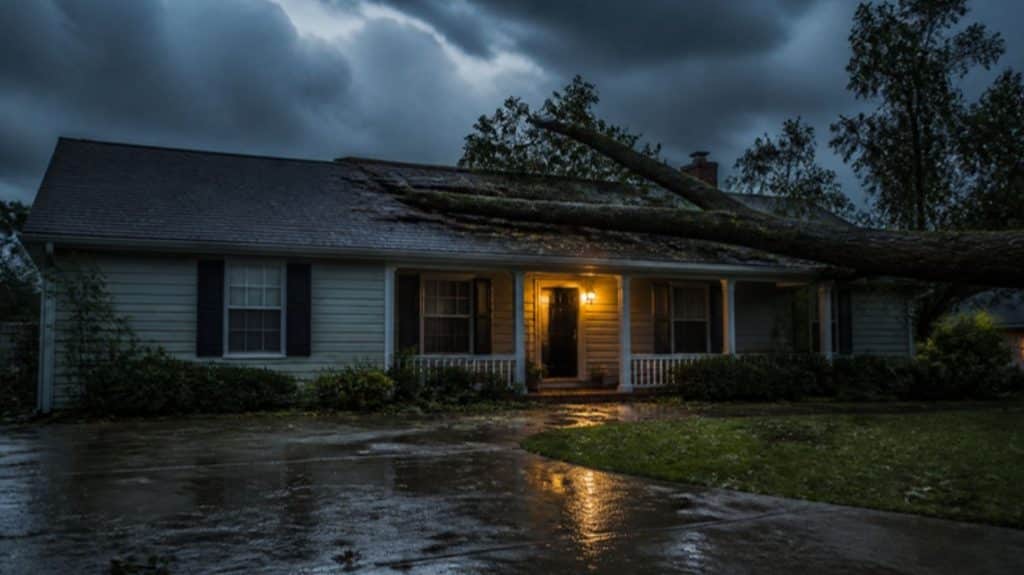
An emergency roof repair is about stopping water and keeping people safe, in that order. It is not the permanent fix, and treating it as one is how small damage turns into a rebuilt ceiling.
Here is what actually happens in the first hours after a roof fails, what you should do before anyone arrives, and where the line sits between a homeowner task and a crew task. TurnKey Roofers takes these calls across the New Orleans area, and the fastest route is (504) 732-0336 or the contact page.
Before anything else: during and right after a storm, the roof is the worst place on the property to be. Everything in the first hour list below happens from inside the house.
Key takeaways
- Active water entry, a hole you can see daylight through, and a sagging ceiling are all same day calls.
- Your first hour is about protecting the inside of the house and documenting what happened, not about getting on the roof.
- A tarp is a temporary cover that buys days or weeks, and it is never the repair.
- Federal construction rules require fall protection at 6 feet and above, which is why the roof part waits for a crew.
- Downed lines and energized water are the fastest way a roof problem becomes a fatal one, so power hazards outrank everything.
- The permanent repair gets scoped once the weather clears and the deck can be inspected dry.
What counts as a roofing emergency
Not every leak needs a truck at midnight. These do.
- Water actively running into the house. A steady drip during rain means the path is open and the deck is getting wet with every hour.
- A sagging or bulging ceiling. That is trapped water with weight behind it, and it can come down without warning.
- Visible sky from the attic. A limb strike, a peeled section of decking or a missing patch of roof covering.
- A large area of covering gone. Wind that takes a swath of shingles or lifts a membrane leaves the deck exposed to the next band of rain.
- A tree or heavy limb resting on the roof. The load is a structural question as much as a roofing one.
- Water near electrical fixtures. Anything wet around a light, a fan or a panel moves the call from urgent to immediate.
Slow staining, a damp patch that only shows in driving rain, or a couple of missing shingles are real problems and next business day problems. The warning signs post sorts the urgent from the merely important.
Your first hour, from inside the house
- Kill power to the affected area. If water is anywhere near a fixture or an outlet, switch that circuit off at the panel. NWS flood guidance is blunt about it: stay out of any room where water covers outlets or submerges cords.
- Move what you can. Furniture, electronics, rugs and paper out of the drip zone, and plastic sheeting over anything too heavy to shift.
- Catch and contain. Buckets under the active drips, towels around them, and a deeper container swapped in before the first one overflows.
- Relieve a bulging ceiling deliberately. A small hole at the low point of a bulge, made from a safe standing position with a bucket underneath, lets water out in a controlled way instead of bringing the whole section down.
- Photograph everything, dated. The ceiling, the walls, the floor, the attic if you can see it from the hatch, plus a wide shot of each room.
- Call a roofer and say what you’re seeing. Active water, ceiling movement, visible daylight and any electrical involvement all change how fast a crew needs to roll.
- Stay off the roof. Nothing on this list happens above ground level.
That sequence protects the parts of the house that cost the most to repair. Drywall, insulation and flooring take damage long before the framing does.
What the crew does on arrival
The first thing a roofer does is decide whether the roof can be worked at all. Wind, lightning, standing water on a low slope deck and darkness all push the answer toward waiting.
Once it’s workable, the sequence is assessment, containment, then documentation. The crew finds the entry point, covers it, and records what they found before anything gets moved.
Finding the entry point is the part homeowners underestimate. Water travels along rafters, along the top of a ceiling joist and down a wall cavity, so the stain on your ceiling is often several feet from the hole that made it.
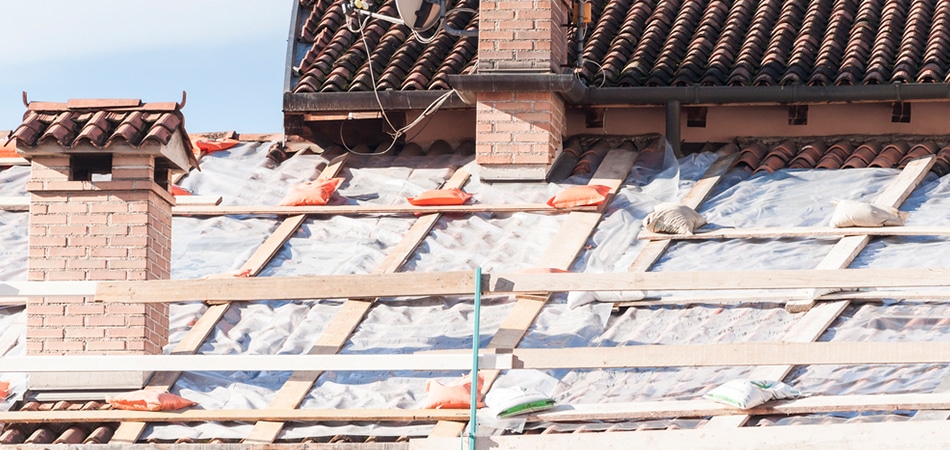
The temporary cover goes on next. On a shingle roof that usually means a tarp fastened over the damaged section with battens. On a low slope membrane it may be a patch sheet or a sealant detail, since a tarp has nothing to grip.
Temporary cover against permanent repair
| Question | Temporary cover | Permanent repair |
|---|---|---|
| Purpose | Stop water entering now | Restore the assembly |
| Typical duration | Days to a few weeks | The life of the covering |
| Weather needed | Workable conditions only | Dry deck and settled weather |
| Deck inspection | Surface only | Full, including sheathing condition |
| Fastening | Battens and temporary fasteners | Code compliant nailing and flashing |
| What it leaves behind | Fastener holes to be repaired | A finished, warrantable roof |
Tarp work also has a right and a wrong method. The cover has to run over the ridge where possible, with the upper edge fastened high enough that water sheds onto the tarp rather than under it, and battens rolled into the edges so wind can’t peel them.
A tarp fastened only at the bottom of a slope funnels water straight into the fastener holes. That’s the most common failure on a self tarped roof, and it usually shows up during the next squall.
A tarp that stays up for months becomes its own problem. Sun degrades the plastic, wind works the edges loose, and the fasteners holding it down are extra holes in a roof that already has one.
That’s why the temporary visit ends with a date for the real work. Our emergency roofing page covers how those two visits fit together.
The hazards that outrank the roof
Storm response kills people every year, and it’s rarely the roof itself that does it.
- Downed or contacted power lines. OSHA rules bar work close enough to contact an energized circuit unless it’s deenergized and grounded or effectively guarded, and require the location and hazards to be identified before work starts. For a homeowner the rule is simpler: assume every line is live and call the utility.
- Water carrying current. NWS guidance says to stay out of any room where water covers outlets or cords, and to avoid areas with sparks or a buzzing sound.
- Moving water outside. Six inches of moving water is enough to knock an adult off their feet, and 12 inches will float a car.
- Ladders. OSHA requires a portable ladder to extend at least 3 feet above the landing it serves, to be kept free of oil and grease, and never loaded past its rated capacity. Storm debris breaks all three of those at once.
- Falls. Fall protection is required in construction at 6 feet and above, and the employer has to confirm the surface can hold a person before anyone stands on it.
A wet roof with loose granules, torn covering and unknown deck condition fails that last test outright. Nobody should be on it without anchors.
What happens after the water stops
The permanent repair waits for a dry deck, and that’s a feature rather than a delay. Sheathing that’s saturated can’t be assessed properly, and roofing over wet wood traps the moisture in the assembly.
When the crew comes back, the scope usually covers more than the hole. Damaged sheathing gets replaced, underlayment is renewed across the affected plane, and flashing at any nearby penetration gets checked while the area is open.
Interior drying matters as much as the roof work. Wet insulation loses its value and stays wet, so it usually comes out, and the cavity needs airflow before anything closes back up.
Whether it stays a repair or becomes a replacement depends on the age of the covering and how far the damage spread. A ten year old roof with one damaged plane is a repair, and a twenty five year old roof with wind damage on three elevations usually isn’t.
Our roof repair page covers how that scope gets set once the emergency part is over.
Frequently asked questions
What counts as an emergency roof repair?
Active water entering the house, a sagging ceiling, visible daylight through the roof, a large area of missing covering, or a tree resting on the structure. Anything involving water near electrical fixtures belongs on that list as well. Slow stains and a few missing shingles are urgent but not same night calls.
Should I put a tarp on my own roof?
No. Tarping means carrying bulk material up a ladder onto a wet, damaged surface, usually in wind, and the deck you would be standing on may already be compromised. Federal rules require fall protection for that height for a reason. Contain the water inside and let a crew handle the roof.
How long does an emergency tarp last?
Days to a few weeks, depending on sun and wind exposure. Plastic degrades in ultraviolet light and the fastened edges work loose over time. Treat it as a bridge to the permanent repair rather than a season long solution.
Can a roof be repaired in the rain?
Temporary containment can often go on in light rain once wind and lightning have passed. The permanent repair needs a dry deck, because sheathing condition can’t be judged when it’s saturated and new roofing over wet wood traps the moisture underneath. That’s why emergency work comes in two visits.
What should I do about a bulging ceiling?
Put a bucket under it and release the water through a small hole at the lowest point of the bulge, working from a safe standing position. Draining it in a controlled way is safer than waiting for the plaster or drywall to give. Keep everyone out from under it until it stops draining.
Call before the next band of rain arrives
Emergency work is measured in hours, and the difference between a two hour response and a two day one is usually the difference between drying a ceiling and replacing it.
TurnKey Roofers responds to emergency calls across the metro area, covers the opening, and comes back to do the permanent repair properly. Call (504) 732-0336 or reach us through the site.
Related reading
- How to prepare your roof for hurricane season
- How to identify and fix common roof leaks
- How weather affects your roof and what you can do about it
Sources
Common questions about working with us
Yes we do, we offer 50 year non pro-rated warranty and 10 year workmanship warranty. We also offer 15 year unlimited wind warranty even from a named storm.
Turnkey roof repair is a comprehensive service where the entire roof repair process is managed from start to finish by a single provider. This includes assessment, planning, execution, and final inspection.
The TurnKey process includes a thorough roof inspection, detailed project planning, sourcing of materials, execution of repairs, and a final inspection to ensure quality and client satisfaction.
The duration varies based on the extent of damage and the size of the project. A professional assessment will provide a more accurate timeline.
Look out for signs such as leaks, missing or damaged shingles, sagging areas, or visible water damage in your ceiling. If you’re unsure, a professional assessment is recommended.
We work across New Orleans and 13 more communities: Metairie, Kenner, Harahan, River Ridge, St. Rose, Gretna, LaPlace, Covington, Mandeville, Madisonville, Slidell, Hammond and Baton Rouge. Call 504-732-0336 and we’ll confirm we cover your street.
Yes. Our 15-year unlimited wind warranty applies even when the damage comes from a named storm. It sits alongside our 50-year non-prorated warranty and 10-year workmanship warranty.
It depends on the size and pitch of the roof, the material you choose, and whether any decking or flashing needs replacing. After a free roof inspection, we give you a plan and a quote. For a breakdown by material and roof size, read our guide to roof replacement cost in New Orleans.


