
Class 4 Impact Rated Shingles and Where They Make Sense
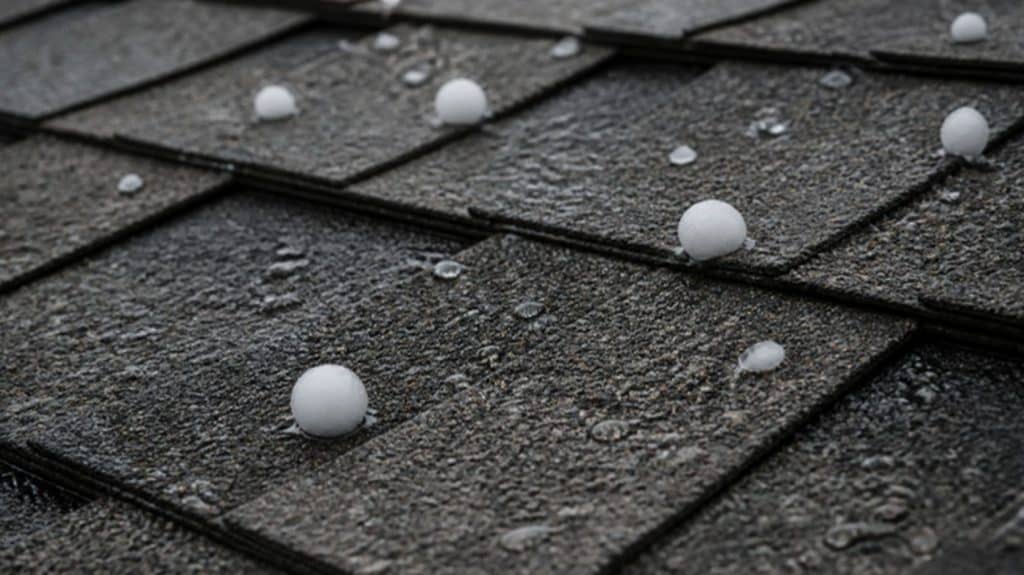
Class 4 is the top impact rating a shingle can earn under UL 2218. It means a two inch steel ball dropped from twenty feet did not crack the shingle it landed on.
That sentence tells you what the rating measures and also what it leaves out. Below is how the test works, how the rating compares with newer hail research, and where the upgrade earns its cost on a Gulf Coast roof. TurnKey Roofers installs these products around New Orleans, and the contact page and (504) 732-0336 both reach the office.
Checking your own roof for impact marks means walking a sloped surface, and hail bruising is easy to miss from the ground. Stay off the roof and have someone with fall protection do the looking.
Key takeaways
- UL 2218 sorts shingles into four impact classes, and Class 4 is the highest of them.
- A Class 4 pass allows dents and cosmetic marking. What it does not allow is a rupture or a crack through the shingle.
- Many Class 4 asphalt shingles get there through polymer modified asphalt, which stays flexible instead of fracturing.
- IBHS built a separate test using laboratory made hailstones because steel balls behave differently from real hail.
- In the 2025 IBHS ratings of 24 impact resistant products, most landed at Good and none reached Excellent.
- Impact rating and wind rating are different tests. A Class 4 shingle still has to meet the code wind classification for your site.
What UL 2218 actually tests
UL 2218 is a steel ball drop test on an installed shingle. For the Class 4 rating, Malarkey’s technical explanation describes a 2 inch diameter steel ball released from 20 feet above the shingle, twice in roughly the same spot.
The pass criterion looks at the back of the shingle rather than the face. A sample passes if the backside shows no visible tearing, fracturing, cracking, splitting or other opening.
That wording is why a Class 4 shingle can still look beaten up after a storm. Surface dents, scuffs and granule displacement are cosmetic, and the rating was never a promise that the roof stays pretty.
The standard also has a documented blind spot. It doesn’t evaluate the effect of weathering, temperature or aging on impact resistance, so the tested sample is a new shingle rather than one that has cooked on a New Orleans roof for a decade.
Standard architectural shingle against a Class 4 product
| Point of comparison | Standard architectural shingle | Class 4 impact rated shingle |
|---|---|---|
| UL 2218 rating | Often none listed | Class 4, the highest of the four classes |
| Asphalt formulation | Conventional asphalt | Frequently polymer modified for flexibility |
| Weight per square | Lighter | Heavier, which can affect handling and framing |
| Cost per square | Lower | Higher, the main drawback owners cite |
| After a hard strike | More likely to fracture through | May dent while staying intact |
| Wind performance | Set by ASTM D7158 or D3161 class | Set the same way, separately from impact |
In practice the lower classes rarely come up in a homeowner conversation. Manufacturers who build an impact rated line generally go straight for Class 4, because that’s the rating that gets asked about.
How manufacturers get a shingle to Class 4
Two approaches dominate. Some products blend a polymer into the asphalt so the shingle stays pliable and absorbs a strike instead of fracturing.
CertainTeed’s Landmark ClimateFlex is one example of the polymer modified route. The same flexibility that helps in an impact is why the product is marketed for installation in cold weather that leaves standard shingles stiff.
The other route is mass and reinforcement, meaning a heavier mat or a laminated backing that spreads the load. Some Class 4 products combine both.
There’s a practical consequence either way. Impact rated shingles are heavier and thicker than a standard architectural shingle, and they cost more per square, which is the honest answer to the drawbacks question.
Where the steel ball test falls short
A polished steel ball is hard, uniform and perfectly round. Real hail is none of those things.
IBHS, a nonprofit building safety research lab, documented natural hailstone size, density, strength and kinetic energy and then built laboratory hailstones to match. Its impact test protocol drops those instead of steel, using 1.5 inch and 2 inch stones, and it evaluates products bought through ordinary retail channels so the samples match what a crew would install.
The results are worth knowing before you spend the upgrade money. In the 2025 ratings round IBHS evaluated 24 impact resistant shingle products, roughly 95 percent of what sells in that category each year, on a scale of Excellent, Good, Marginal and Poor.
Most products earned Good, and none earned Excellent. These are all products sold as impact resistant, which tells you the label marks a floor rather than a ranking.
Impact rating is not wind rating
These get conflated constantly, and they measure different failures. Impact resistance is about something striking the roof. Wind resistance is about uplift pulling shingles off it.
The residential code handles wind separately under R905.2.4, which points to ASTM D7158 as the primary wind test, ASTM D3161 for shingles outside that standard’s scope, and ASTM D3462 for the material itself. Table R905.2.4.1 sorts shingles into Classes D, F, G and H against ultimate design wind speeds running from 110 mph up to 194 mph.
- Check both labels. Shingle bundle wrappers carry the standard and classification. A Class 4 impact label says nothing about which wind class the product meets.
- Wind class follows the site. Coastal Louisiana design wind speeds push the required classification upward, so the product spec is set by where the house is.
- Installation decides the outcome. Nail placement, nail count and starter course detailing drive wind performance more than the shingle line does.
- Sealing takes time. Self seal strips bond with heat, so a roof installed during a cool snap is more vulnerable until it sets.
Our unlimited wind warranty page covers how the wind side of the specification is handled on the jobs we install.
Warranty language deserves the same care. CertainTeed publishes a 15 year 110 mph wind resistance warranty on Landmark ClimateFlex, with an upgrade to 160 mph that requires the matching starter and hip and ridge products. Mixing brands at those two details can quietly cost you the higher figure.
Where Class 4 makes sense in the New Orleans area
South Louisiana is not the hail alley of the central plains. We still get severe thunderstorm hail, and we get plenty of wind driven debris, so the question is worth asking rather than assuming.
The failure mode worth picturing is granule loss. Granules are the shingle’s sunscreen, and a strike that knocks them off exposes the asphalt below to ultraviolet light, which ages that spot faster than the rest of the roof.
IBHS evaluates products across the damage modes seen in real storms, including dents, tears and granule loss, rather than cracking alone. That broader view is why two shingles with the same label can score differently.
- You are already replacing the roof. The upgrade cost is the difference between two shingle lines, not the price of a separate job. That’s the cheapest moment to take it.
- The roof is steep and highly visible. Cosmetic denting shows on a prominent slope, and the polymer modified products hold their appearance better after a strike.
- There are trees close to the house. Falling limbs and pine cones punish a standard shingle, and impact rated products shrug off more of it.
- You plan to stay put. The upgrade pays back over years of not repairing, so it suits an owner with a long horizon.
- The rest of the assembly is being done right. A premium shingle over tired decking and thin underlayment is money in the wrong layer.
If your roof has already taken a strike, the hail damage roof repair page walks through how those repairs get scoped. If you’re choosing a product for a new roof, our shingle roofing page lays out the lines we install.
What to ask before you buy an impact rated roof
- Which UL 2218 class the product holds, and whether the label is on the bundle rather than on a brochure.
- Which wind classification it carries under ASTM D7158 or D3161, and whether that meets the design wind speed for your address.
- Whether the manufacturer requires matching starter strip and hip and ridge product to hold the stated wind rating.
- What the warranty covers, since cosmetic denting and functional failure are usually treated differently.
- Whether the deck and underlayment specification is being upgraded to match the shingle.
Frequently asked questions
What are the drawbacks of class 4 shingles?
Cost is the main one, since impact rated shingles carry a premium per square over standard architectural products and they are heavier to handle. They also dent, because a Class 4 pass permits cosmetic marking. A hard strike can leave a visible bruise on the surface even though the shingle has not cracked through.
What is the difference between a class 3 and a class 4 shingle?
Severity of the impact each one survives. UL 2218 has four classes, and Class 4 sits at the top, tested with a 2 inch steel ball dropped from 20 feet twice in roughly the same spot. Class 3 is one step below, tested at a less severe impact, so a Class 4 product is the stronger of the two.
Are 50 year shingles class 4?
Not automatically. Warranty length and impact rating are separate things, and plenty of long warranty architectural shingles carry no impact rating at all. Check the UL 2218 class printed on the bundle rather than inferring it from the warranty term.
Does a class 4 shingle stop hail damage completely?
No. The rating certifies performance against a specific steel ball impact, and real hail varies in size, density and shape. IBHS testing with laboratory made hailstones found that products carrying the same Class 4 label perform differently from one another, with most rated Good and none rated Excellent in the 2025 round.
Can class 4 shingles go on any roof?
They follow the same slope rules as other asphalt shingles, so the roof needs a slope of at least 2:12. Weight is worth a look on older framing, since impact rated products are heavier than standard shingles. A roofer can confirm the deck and structure are ready before the order goes in.
Talk through the upgrade before you order shingles
The Class 4 decision is easiest to make while the roof is being specified, not after the truck shows up. It’s a product line choice, a wind class check and a deck condition check, all at once.
TurnKey Roofers will look at your roof, tell you what it needs, and give you a free estimate with the options priced side by side. Call (504) 732-0336 or send your details through the site.
Related reading
- Best roofing options for the New Orleans climate
- How weather affects your roof and what you can do about it
- 5 questions every homeowner should ask before roof work begins
Sources
Common questions about working with us
Yes we do, we offer 50 year non pro-rated warranty and 10 year workmanship warranty. We also offer 15 year unlimited wind warranty even from a named storm.
Turnkey roof repair is a comprehensive service where the entire roof repair process is managed from start to finish by a single provider. This includes assessment, planning, execution, and final inspection.
The TurnKey process includes a thorough roof inspection, detailed project planning, sourcing of materials, execution of repairs, and a final inspection to ensure quality and client satisfaction.
The duration varies based on the extent of damage and the size of the project. A professional assessment will provide a more accurate timeline.
Look out for signs such as leaks, missing or damaged shingles, sagging areas, or visible water damage in your ceiling. If you’re unsure, a professional assessment is recommended.
We work across New Orleans and 13 more communities: Metairie, Kenner, Harahan, River Ridge, St. Rose, Gretna, LaPlace, Covington, Mandeville, Madisonville, Slidell, Hammond and Baton Rouge. Call 504-732-0336 and we’ll confirm we cover your street.
Yes. Our 15-year unlimited wind warranty applies even when the damage comes from a named storm. It sits alongside our 50-year non-prorated warranty and 10-year workmanship warranty.
It depends on the size and pitch of the roof, the material you choose, and whether any decking or flashing needs replacing. After a free roof inspection, we give you a plan and a quote. For a breakdown by material and roof size, read our guide to roof replacement cost in New Orleans.


